

Friday, December 18, 1970
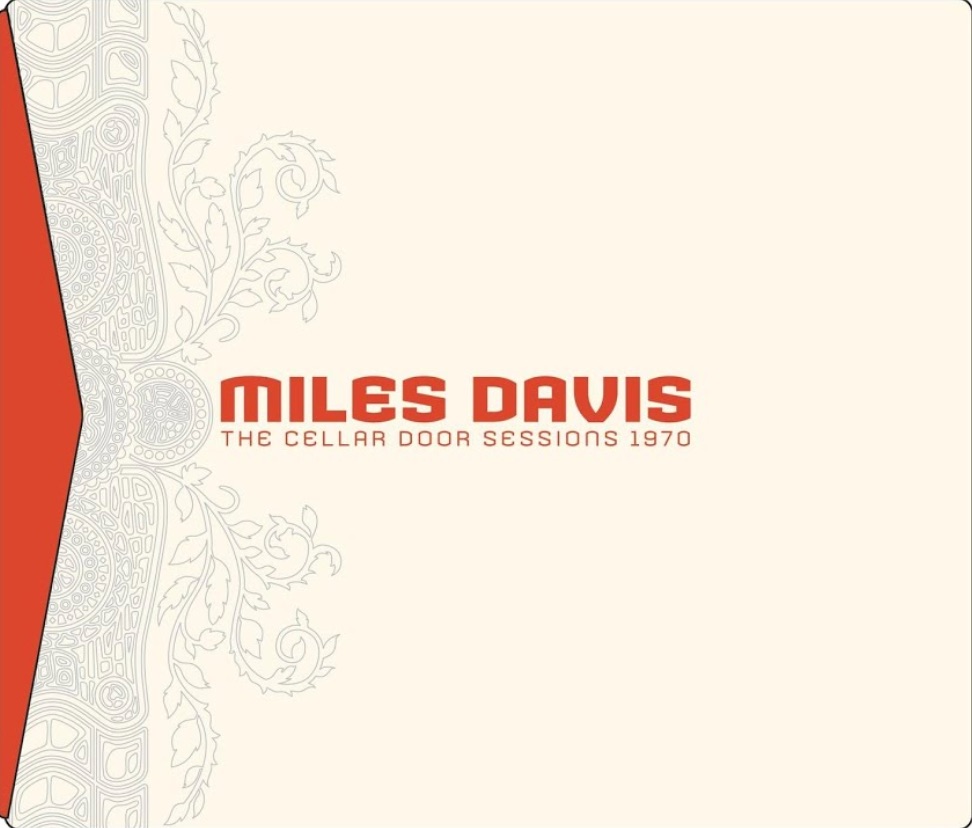
When The Cellar Door Sessions 1970 (Columbia, 2005) recordings were made, none of the members of Miles’ band had yet reached age thirty. The leader himself was only forty-four. But even at their younger ages, the intense physicality of the playing for three sets a night, Friday and Saturday, had to be a workout. The liner notes to the recording state that all three sets on both nights were recorded, yet only the second and third made it to disc. Hmmm.

–Directions. Rolling tape, producer Teo Macero catches Keith Jarrett and Michael Henderson warming up, but Jack DeJohnette calls the meeting to order with the crack of his backbeat like a starter’s pistol–and the track meet begins. No wonder Miles chose this composition to begin his sets.

–Honky Tonk. After the sprint of “Directions,” the placidity of “Honky Tonk” feels like a breather. DeJohnette’s epic, three-minute press roll on Thursday’s version of the song is reduced to 1:45 here, and instead of ending with an orgiastic explosion, it leads to one of Bartz’s most get-down blues solos of the four-night engagement, with Airto moaning wordlessly in sympathy.
–What I Say. The moderate energy level of “Honky Tonk” extends to a relatively polite reading of “What I Say,” though Miles, playing open and without electronics, is appropriately pushy in his solo statement. In his Pop Matters review at the time of its release, Will Layman called Miles’ contributions on this set his “best pure trumpet playing on record.” Reasonable listeners can disagree, but there’s no gainsaying the forthrightness and sheer muscularity of his sound. At forty-six minutes, this was a relatively short set. Was this a matter of musical choice, a late start or the need to clear the room for the third-set crowd? Whatever the reason, the late began as the second set did with . . .

–Directions. A more exploratory take on the familiar opener, especially for Henderson, who anticipates both Jaco Pastorius and the “lead bass” concept of Miles’ ‘80s bands. While the bassist is most often credited for laying down a solid, R&B-oriented bottom, he did more than this. Like his exact contemporary Bootsy Collins did when he joined James Brown’s band nine months earlier, Henderson pulls and stretches the groove here without ever losing it. He could be a timekeeper and soloist simultaneously.

–Honky Tonk. The musical association between Keith Jarrett and Jack DeJohnette began in 1966 when both came together with bassist Cecil McBee – still with us at 90! – in the Charles Lloyd Quartet that worked and recorded regularly, in the U.S. and abroad. When DeJohnette brought Jarrett into Miles’ band, the two had developed some chemistry. You can hear it at the beginning of “Honky Tonk” when the drummer sets up a proto-drum ‘n’ bass groove that Jarrett wanders away from before returning to it before Miles’ solo. It happens again at the end when DeJohnette sets up a marcato rhythm that reels Jarrett in. The two would enter L.A.’s Sunset Sound six months later to record Ruta and Daitya (ECM, 1973), sticking a pin in a musical partnership that would continue for more than fifty years.

–What I Say. As in the first set, the energy level on this rager was not as high as it had been on Wednesday and Thursday nights, and certainly not as electrifying as it would be on the famous Saturday session. Given a wider field of expression, DeJohnette opts for precision over power in his solo—or maybe it‘s two solos separated by a false ending. Every stroke is precisely articulated and cleanly delivered. Miles responds with an open-horn solo that its faraway loneliness recalls his work of two years earlier.

–Sanctuary. Two minutes of vaporous, near-unison mystery from Miles and Bartz.

–Improvisation #3. Squint hard enough and you can begin to make out the contours of the rhapsodic solo piano style that would establish Jarrett’s reputation on ECM Records in the year to come.

–Inamorata. Another two-man game, this time involving Jarrett and Michael Henderson. After a Bartz solo that erupts into hoarse-toned screaming, Henderson’s bassline comes to the fore, and Jarrett doubles it to begin his own solo. Something similar happens at the end of the song when Jarrett enters the conversation on what begins as a solo feature for Henderson. After leaving Miles, the pianist would never play with this kind of bassist again, and that’s kind of a shame.


Leave a Reply