

Artistic expression has a fascinating duality between isolationism and communal creation. There is a romanticized archetype of the lone creator. As Henry Miller claimed, “an artist is always alone – if he is an artist.” Or as graphic artist Lou Dorfsman put it, “creativity is essentially a lonely art.” But is not the reader of a novel or the perceiver of visual art not a second, albeit silent, participant in the conversation? Additionally, do not the shadows of artistic heroes and contemporaries also shape the ultimate works? Is anyone ever truly and fully “alone”? The tense, intimate relationship between isolation and community is especially pronounced in music. Even setting aside the roles of the listener and the inspiration of other artists, music remains an increasingly collective experience. While fully solo works do exist, they are far rarer than collaborations. For every album like Anthony Braxton’s For Alto (Delmark, 1971), there are countless more duos, trios, quartets, and larger group recordings. Partly, this is due to the richness that emerges in group conversation, and partly it is a reflection of logistical function. A painter hypothetically has every color at their disposal. A musician – even with extended techniques – can cover only so much timbral range on a specific instrument. Expansiveness in this realm is perhaps what best defines Shabaka’s Of the Earth (Shabaka, 2026).
Most commentators will likely hail Of the Earth as a saxophone king’s return to his throne. To some extent, it is. For many years, Hutchings, one of the most influential saxophonists of his generation, built a career around his horn. As a prominent figure representing the booming UK “jazz” scene, his bands had a unique capacity to reach audiences far beyond the stereotypical jazz follower by blurring jazz, electronic, spiritual music, and diasporic traditions. In the case of Sons of Kemet, those experiences included a booking at Lollapalooza in 2022. For The Comet is Coming, a date at Coachella a year later. Both practically unheard of bookings for a quartet of sax-keys-drums-and tuba or a sax-keys-drum trio, respectively. So, to many, when Shabaka announced in 2023 that he was hanging up his primary instrument to focus on flutes, the decision seemed puzzling. Admittedly, even this author did not fully comprehend the choice when it was made. With Of the Earth, he ends his self-imposed exile from Adolphe Sax’s horn, a cause for celebration. But, in so doing, he also makes a salient point. The horn itself is but a well-carved chunk of metal, cork, leather, plastic, and bamboo. The burning intensity. The emotional rawness. That all comes from Shabaka, not the saxophone.
Of the Earth reveals the artist at his most exposed. It is a true solo recording in the sense that he not only performs all parts but also produced it entirely himself. As the mastermind behind it all, Shabaka shows he is not “just” a saxophone player. Not “just” a composer. Not even “just” a flute player. The album is a mature and singular statement of the kind available only from the rare artist bold and courageous enough to release a multi-instrument solo record. Fans of Shabaka’s earlier works will still find moments on the album that harken back to the earlier recordings they love. For one, the opener, “A Future Untold,” features a longingly aspirational evocation on tenor sax atop the gently babbling backdrop of electronics and chimes. But it is just one of many colors on his sonic palette, no different than the alto flute he uses. Or the sampled and synthesized beats. Or his own – new to his recordings – rapping. But putting them all together allows him to paint a broader and richer picture than its parts. By moving beyond the narrowed focus of a particular instrument and towards a conceptualization of sound more generally, he is able to transport the listener to biomes of artistic excellence. With “Those of the Sky,” this means floating puffy clouds of flutes gradually turning dark and stormy. With “Go Astray,” the listener experiences low-pitched tremors via rap about greed and suffering that build to a volcanic eruption. “Step Lightly” cautiously walks through the ashen remains, searching for a surviving tranquility. The closer, “Eyes Lowered,” a more contemplative rap over harp-like tones enveloped in space and silence, suggests a more peaceful acceptance even as the speaker continues to seek betterment. Until the piece ends abruptly, leaving the listener to craft the rest of the story themselves.
We sat down with Shabaka – ahead of the album’s release on March 6, 2026, and an upcoming date at the Big Ears Festival (March 28, 2026, which also includes a duo set with Thurston Moore) – to discuss Of the Earth, the nature of artistry, and the tools that serve as his paintbrushes.

PostGenre: Perceive Its Beauty, Acknowledge Its Grace, featured several guest artists. With Of the Earth, you are the only artist throughout the entire album. Was it a conscious choice from the beginning to strip the album to only you on multiple instruments, or did that organically come out of the process of creating the album?
Shabaka: I wasn’t initially sure it would even be an album. I have been making beats and small bits of music for a while, just for my own pleasure in learning the equipment. But there was an epiphany moment where I had to take stock of what I’d been doing. I realized that the music I was making should be an album; it reflected where I am musically, especially on the production side of things. Before that, I still had in my mind that I’d record with a band, or a group of musicians, for whatever the next album was going to be. But when I decided this project was going to be an album, it increasingly seemed like it could only have my voice on it.
PG: Was it more difficult to create an album where you are on all parts compared to one where you are working with other musicians?
S: It was more time-consuming. If I’m doing everything all by myself, I can chip away at things for long periods of time. I really like being able to go over music, in small details, for long periods of time, and to have the freedom to reflect on what I’ve done and know what I can add to it. There’s no process of trying to get people together in a studio, scheduling-wise when it is only me. It’s all a matter of simply following my creative instincts wherever they go over a period of time.

PG: Did you follow a consistent process throughout the album for putting your parts together, or did following your instincts mean you took a different approach with each track?
S: My approach differed for each track. In general, the flute parts came after the production parts. But, in general, how the parts came together was overall pretty ramshackle. There was no consistent method. Actually, going forward, if I were to do another album like this, I definitely would have a much more methodical approach because some of the aspects of how I got this one together were very gung-ho.
PG: As far as the flute specifically, on Perceive Its Beauty, Acknowledge Its Grace, you played many different types of flutes from around the world, including the shakuhachi. On Of the Earth, you mostly play the alto flute and step away from the others. Was it a conscious choice to focus more on a specific type of flute, or was that solely a reflection of where your ear led you?
S: It was where my ear led me. It was also because of the nature of the beats that I made which were very suited to having a Western flute that was more tonally in that world. At the end of the day, it’s all about what flutes suit the rest of the music I’ve made. I’ll go through the flutes and see what sounds best, and the alto flute sounded best. Most of the flute lines you hear on the album are recorded three to five times in layers. So even if they’re harmony parts, each line of the harmony is recorded in multiple stacks. And I find the alto flute sounds especially good when you do that. It has a really nice, warm sound. But I also use some Brazilian flutes on the album. Those work pretty well, too.

PG: And at what point did you decide to return to the saxophone for the album?
S: Basically, I decided to revisit the sax for [South African drummer] Louis Maholo’s memorial concert. He and I had played together a bunch before. I was in a band with him. Returning to the saxophone was not something I was scheming about. I hadn’t decided that I’m going to come back to the sax by the time of Louis’s memorial concert, but the concert was an excuse for it. I really wasn’t intending to come back to the sax, but the more I thought about what I wanted to give at the memorial concert, the more it became obvious to me that I needed to honour Louis’s memory by playing the saxophone.
And once I decided that, I really thought about the saxophone as just one of my many instruments without a veneer of greatness or exclusivity in my life. It’s just part of my arsenal. After my hiatus, the saxophone has become something that’s not so defining of who I am anymore. It has become only one of my modes of expression as a multi-instrumentalist.
PG: And one thing that most stands out about Of the Earth is how well you blend all the instruments together. It would seem that was partly accomplished by your stepping away for a while and then coming back to put the instruments on an equal footing.
S: Yeah, completely. I think I needed a situation where my physicality was expressed as opposed to my instrumentalism. And for me, that’s the main thing. It’s not about how well I can play any instrument in particular. It’s about my musical decisions, how intentional they are, and how specific they are towards my ultimate emotional landscape.

PG: This may not be for you to say, but do you see a parallel between your stepping away from the saxophone and Sonny Rollins doing so? While he did not focus on other instruments, he did feel that his music needed him to put the horn aside for a while.
S: Maybe. I guess the parallel lies in being attuned to the voice that directs you to do something, and going with that voice as opposed to following the voice that says everything is going fine. Ignoring the voice that says that because you’re being applauded in a particular aspect of music, you’ve got to give the people what they want. A lot of people thought I was crazy when I put aside the saxophone. They were like, “What do you mean you’re not playing the sax anymore? You’ve become so acknowledged for playing this instrument.” But there was no way that I could keep playing the saxophone. It wasn’t what I was practicing. It wasn’t where my heart was.
PG: Presumably, you faced a lot of pressure to return to the saxophone.
S: It wasn’t overt pressure, but it was more amusement and confusion about the fact that I could make what seemed like such a hard, rash, or irrational decision.

PG: Now that you’re doing both fully, do you feel that playing flutes influences your current approach to the saxophone or that returning to saxophone has influenced how you approach the flute?
S: In terms of actual skill, I guess with the flute, I’ve got a kind of poise when I play, which means that I don’t get so physically into what I’m doing. The flute simply has a different dimension of physicality than the saxophone. And that’s what I think I needed on the saxophone. I needed to increase that type of physicality as opposed to what I was doing, which was more overtly energy-based. My focus before the flutes was more on how much energy I could put into the instrument. But now, I think my focus is more on how to use my energy and direct it in a way that’s the most ergonomic.
PG: And where does your rapping fit into all of it?
S: Because I have been making beats and those beats need a rapper, I decided that I should do the rapping myself.
PG: Do you think you will continue to rap going forward, or is that just for this particular project?
S: I think it’s like the saxophone. If my rapping fits and I’ve got something to say, then I’ll do it. I’m not morphing into a rapper. It’s just part of an expressive palette.
André 3000 opened up that possibility of rapping to me. The fact that he’s a rapper who started to play the flute opened the floodgates. We can actually all do whatever we creatively put our hearts into. If I want to rap, then I can rap. While I’ve not rapped before, that doesn’t stop me from just following the creative thread and seeing what comes out of it.
For me, that’s the significance of André; his attitude suggests that we are capable of going on these unexpected creative voyages. Art shouldn’t be about showmanship. It’s not about trying to show someone how accomplished you are at something. Art is about showing the process someone is embarking on in terms of experimentation and collaboration.

PG: That experimentation must be difficult in light of the commercial side of music. For example, there were probably some market pressures for you to return to the saxophone earlier, while you were using that time to dig deeper into what you were trying to express musically, not show off your skill on the horn. The music industry is not set up to facilitate that exploration.
S: No, it’s not set up for that at all. But there are no guarantees in the industry anyway. All you can do is follow what you think is true. And at least you’ll get a good lesson out of it.
PG: Related to the industry, Of the Earth is coming out on your own imprint, Shabaka Records. You also previously had the Native Rebel Recordings label, which drew some inspiration from ECM Records. What do you feel you learned the most from the experience of working with Native Rebel that may translate into this venture with the new imprint?
S: I guess Native Rebel was the start of my production journey, as I produced the albums on that label. But that production was in more of a classic sense of being in a studio and being an ear for the whole process of making the albums. With my new album, the level of production was also more hands-on in terms of mixing and engineering than it was with Native Rebel.
But, in general, you realize how much the whole thing of putting out is a labor of love for anyone who runs a label. You don’t really earn money from creative music. What you’re doing is creating a discography out of a love of the music and a feeling that its story needs to be told.
This is why I like aligning my label to the ECM model, because it’s not about putting out algorithms. It’s about actually fulfilling a particular aesthetic by creating a story out of the whole thing.

PG: Are you specifically taking inspiration from how Manfred [Eicher] loves to use space around the notes?
S: Not in such an overt way, but I guess so. There’s a consistency in how ECM’s records sound overall. And I guess that might come into the new album. I think one of the guiding principles is consistency; that everything on the label must fit within the same sonic world.
PG: As far as producing your own music, do you feel that doing so frees you up to explore the music you want instead of possibly being shoved into genre boxes or labels that thrust upon you by someone else producing it?
S: Completely. As a musician, I think the first step of producing is calling yourself a producer and thinking about what that means. Being a producer can be anything from downloading a four-dollar sampling app to your phone and making experiments to learning about how [Digital Audio Work Stations] work. As an instrumentalist, there’s one level of playing an instrument and performing in real time to make the magic happen live or in the studio. But then there’s a whole other dimension to music making when whatever happens in that moment becomes all the old material, and a whole bunch of other processes can be done to turn it into something else. For me, when musicians ignore the second aspect and solely focus on the initial creation of the sound itself, they do themselves a disservice. They are basically outsourcing a part of their creative practice to someone else who might not even discuss where they’re coming from on a deep creative level with the instrumentalist.
For me, to get the most creative input into the sound that you’re creating, you’ve got to be a producer. And I think most musicians can be producers. It’s just about learning new skill sets. Everything is available on YouTube these days for them to learn how.

PG: Why do you think more musicians do not produce their own music then? Is it solely a function of the time and work involved?
S: It’s the time and work involved. I also think that, in terms of what I’ve seen personally, a lot of musicians label themselves. They limit themselves to the instrument they play. They became good at a particular instrument, or they decide to commit to one instrument, and because they’ve reached such a high level on it, they often find it really difficult to go down to a beginner level on another instrument. It’s humbling to encounter another instrument or process that you’re not good at and in which you need to face the same uphill struggle of learning how to be proficient at something that you’re not proficient at.
For me, whenever you learn something new, it makes your overall capacity greater. If you’re looking at your instrumental skill in an asymmetric way, learning how to play another instrument increases your capacity on the instrument you are already good at, that which you are primarily playing. It’s our job as artists to grow. It’s not to provide a commodity for people to consume at concerts. It’s to have a journey where we’re trying to understand what our purpose, what our musical function, is. And I think you won’t know your musical function simply because you studied an instrument in college.
PG: So, do you feel you would be as open to producing if you had not put the saxophone away and had to learn new instruments, like the flutes?
S: Yeah, because I produced the records for Native Rebel before putting down the sax. But I do think everything is cumulative. So, I think the mentality that led me to put down the saxophone added up to this thought that I’ve got to follow my artistic path, whether that means practicing the flute or staying up all night watching YouTube videos about how to use some new piece of gear. It is all basically at the service of keeping the creative spark going because, for me, it’s not about proficiency per se. It’s about how enthusiastic I am about what I’m doing. I’ve got to be enthused by it. I’ve got to get out of bed, really wanting to go to the thing that I’m involved in.
And with the saxophone, I can tell you, before I put down the saxophone, I was doing really great gigs with Sons of Kemet. But I wasn’t particularly enthusiastic because we were touring so much. We had the package of how we performed the set together, but it wasn’t something that was rousing my creativity. It was just something that I knew how to do very well.

PG: So, with you adding rapping and re-introducing the saxophone to your works, are there any other instruments you feel would fit into your artistic picture in the future?
S: Well, I started to learn the Moog Theremini, which is a variant theremin. It’s not something I would have expected I would be learning to play, but there’s something about the stillness and intention that you need when you play it that fits naturally with the progression from the sax to shakuhachi and other flutes.
I also really enjoy playing the Theremini. I love the movements that you make when playing it and the general poise you need for it. It’s always a pleasure to come into contact with instruments like the Theremini, that people have spent so much time developing.
There’s also a synth I’ve been experimenting with called the SOMA Terra, which provides a really awesome and new way of seeing and touching the synth. It reflects the sound that comes out. I think working more with electronic instruments is the way I’d like to go in the future; to have more interaction with novel instruments, with instruments that are really functional, specifically. It is great to be able to actually give yourself a very cool and fresh context without relying on another musician. To simply be able to actually experiment and find what you want.

PG: You created most of Of the Earth while you were traveling. Do you feel that the fact that you were moving around and changing places shaped the album itself in some way?
S: Not necessarily in a tangible way. But I think it definitely shaped it in an intangible way, because when you move around a lot, it means that you can consider what you’ve done in different contexts. For instance, if you’re doing an album and sitting in the same studio, you might finish a particular section, take a break, come back, and listen to it in the same environment. Whereas if you make a bunch of beats in an airport lobby, then take a flight and you get off in some other part of the world, you’re on a journey and consider your music in different environments. You hear it with different ears. I find it very beneficial to listen to music you’ve made in different environments. It puts a different focus on what needs to be done or what works.
PG: And then for actually translating the record into live performances – you have some dates coming up, including at Big Ears – how different will live performances be from the record, as you’re not producing as much in a live performance per se?
S: That is a question that I’ve been grappling with a lot. I want the production to stay. I don’t want it to be a case where there’s all this specific production in terms of specific sounds, then I’ve got to recreate it live, and it doesn’t sound like that. What I want is for the sounds from the album to be treated like a stem; one part of the body of music. But what you hear on the album is just one line of it. Live, I will add other lines. They might be lines that I record on a loop. There might be other stuff that I recorded. They might be me playing over the initial line. For Big Ears, I’ll be bringing a drummer with me, and they will add to it all as well. For me, live performance is all about expanding on the album as just one part of a bigger musical tapestry.
PG: Big picture, your music often focuses on both the present moment – politics and the implications of history – as well as something larger in a spiritual sense. Where do you see Of the Earth on the continuum between something more cosmic, and something more grounded and focused on the issues of now and here?
S: That’s an interesting question. The actual words on the album put it into a particular space. Because I was so involved in the actual craft of the album, it l represents where I’m at and how I see things today. It’s not trying to go to another time.
But yours is a tough question. I guess when I was making the album, all I could do was try to be honest about where I am, what I’m seeing, and what I’m feeling about what’s around me. I guess in that way, all of my albums are political in that your aptitude represents what’s actually given on the album. But as far as music being spiritual, what I see as spiritual music is music that rouses your spirit. If you think of spirit in the English definition of the term, as in to do something in great spirits, it means you do that thing with vitality. That’s the opposite of inertia in that it rouses you towards action. For me, any music that gives you energy when you listen to it is spiritual music. When I was preparing the initial beats for myself before I put them together for this album, I would make demo versions and have them on in my headphones as I went about my business. Most of the album’s music is made for me in that way. So, in some ways, the music has its own experience. I want music that I can just put on and have it get me through my day.
‘Of the Earth’ will be released on March 6, 2026 on Shabaka Records. It can be purchased on Bandcamp. Shabaka will be performing at the 2026 Big Ears Festival in Knoxville, Tennessee on March 28, 2026 as both a performance of music from the album as well as a special duo set with Thurston Moore. You can read more on the festival’s website. More information on Shabaka is available on his website.
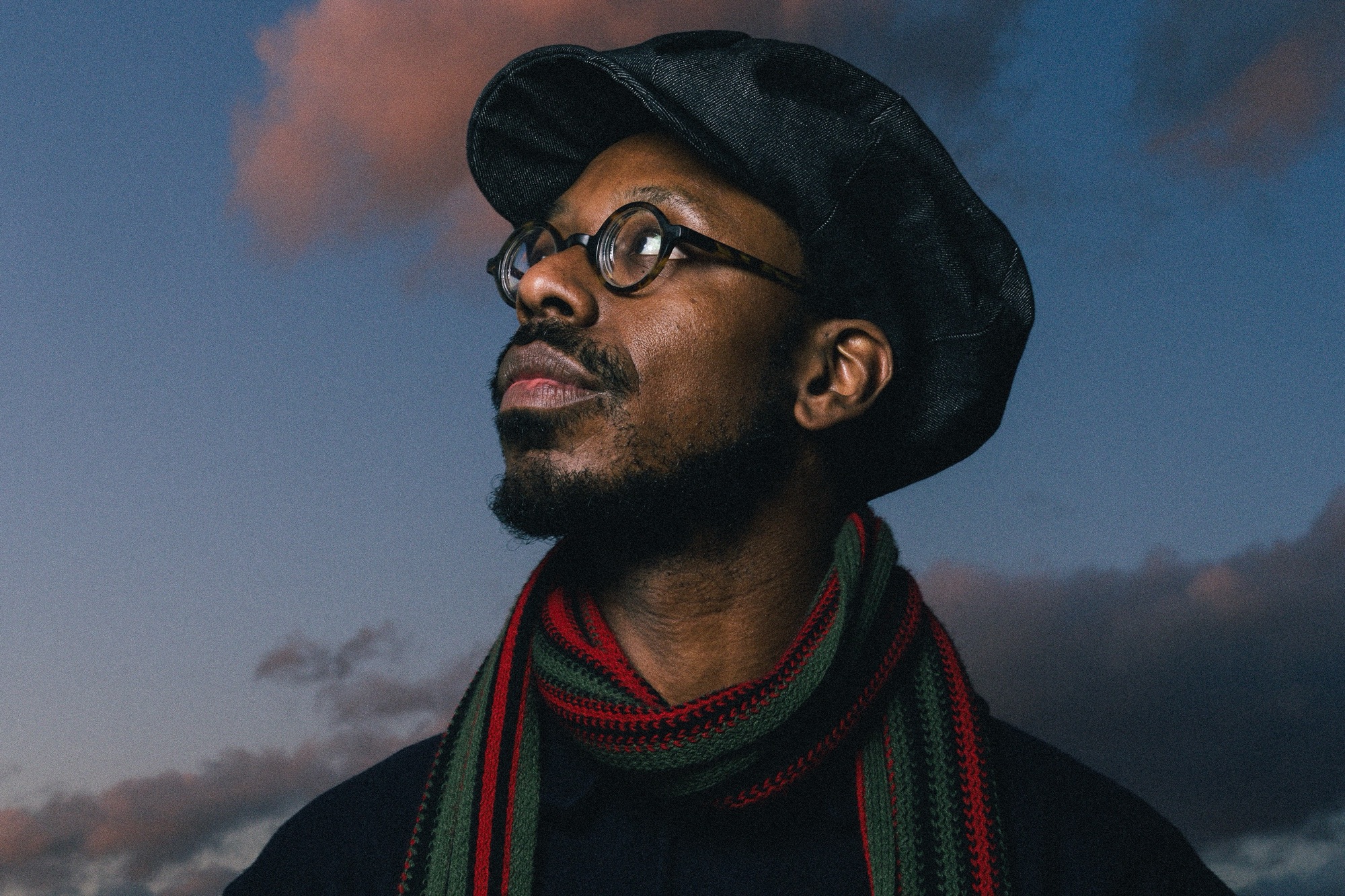
Photo credit: Atiba Jefferson.


