

|
Getting your Trinity Audio player ready…
|
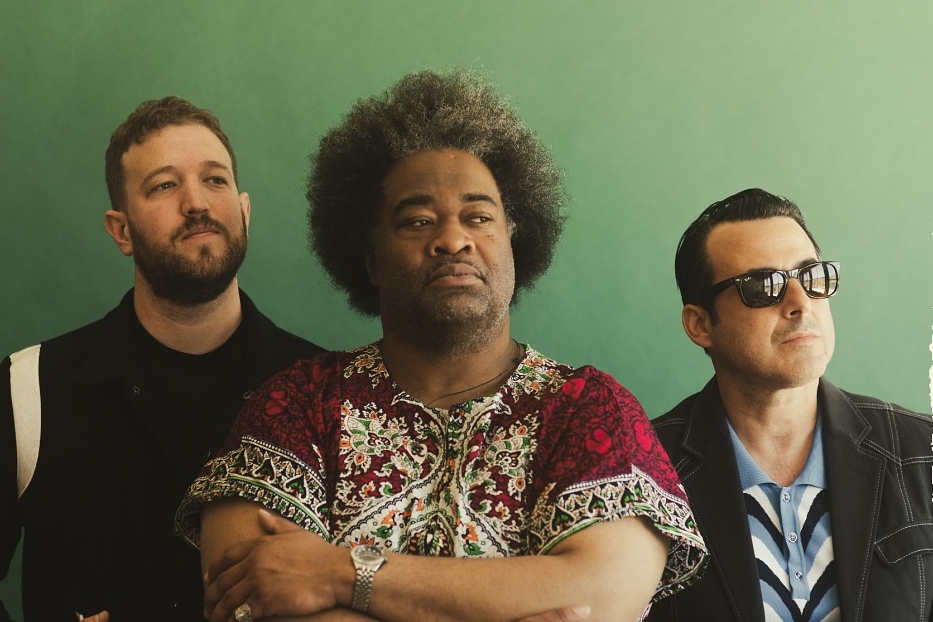
Before setting anchor at a fortress by the sea. Before fencing the sprawling field beneath a problematic hill. Before cramming into a small stonewalled park. The Newport Casino was where, in 1954, George Wein and the Lorrilards made possible the idea of a jazz festival in the Sailing Capital of the World. Built between 1879 and 1881, the Casino represents a bygone era in a city of summer cottages. A social club for Newport’s social elites, the venue provided its members with tennis courts and a ballroom. But jt also hosted several spaces seemingly lost to time: card rooms and reading rooms. Rooms with muted yet sophisticated colors. And while the function of such spaces is now mostly sepia-hued impressions of an era passed, it is hard not to tie their existence to the music of the trio Parlor Greens – with Tim Carman, Jimmy James, and Adam Scone.
Such social rooms – often referred to as parlors- frequently housed acoustic, reed-based organs. These parlor organs were central to musical life before radio and television. They helped establish the organ as an instrument that could create vibrant music with minimal instrumentation, as a voice not relegated to the church. While there is no direct historical link, in many ways, the freeing of the organ artistically and locationally must have at least partially led to the Hammond B3s, which would dominate 1950s and 60s jazz clubs. As to the latter, particular late-night magic was found for decades in the pairing of B3, electric guitar, and drums. There was a particularly special synergy between the two amplified instruments. Jimmy Smith with Wes Montgomery, Jack McDuff with Grant Green, and Jack McDuff with George Benson are but a few of such magical pairings. Yet the drums are essential to hold it all together. In the words of the legendary Dr. Lonnie Smith, “With the organ trio, you’re painting with sound. The organ can be the rhythm, the harmony, and the melody all at once, and the drums and guitar just make it explode.”
Parlor Greens directly ties the social club to the smoky jazz lounge. Its name comes from the colors of the former, albeit a version from decades later. But its sound is the direct descendant of the latter. The trio’s debut recording, In Green/We Dream (Colemine, 2024), exudes a warmth that pervades even the slow, bluesy ballad of “Flowers for Sharon.” The supreme funkiness of the group across most of the album, despite it being their first time together, speaks to the artistry and experiences of drummer Tim Carman (GA-20), guitarist Jimmy James (The True Loves and formerly the Delvin Lamarr Organ Trio), and organist Adam Scone (Scone Cash Players and The Sugarman 3). Overall, In Green sits comfortably alongside the output of the organ trio greats. And yet, the artists are not happy to merely replicate what came before. Instead, they find ways to update the core sound, whether drawing ancestral lines from Daptone back to Stax or dragging into both psychedelica and the deep New Orleans funk of the Meters on “Parlor Strut.”
The social rooms where the organ was freed have since closed. The small clubs where the format was mastered have been cleared of their smoke. But In Green / We Dream reminds us that the organ trio setting remains as relevant and vibrant as ever. With Parlor Greens, the format’s legacy is left in good hands.
We sat down with Carman, James, and Scone to discuss the group, their album, and the upcoming Newport Jazz Festival performance on August 3, 2025.
PG: Do you remember when you first become aware of the Newport Jazz Festival?
Adam Scone: I do. I first learned about it from Jazz on a Summer’s Day (Galaxy Attractions, 1959). Then I went to the Festival one year in the 1990s and saw the Miles Davis band – featuring Wayne Shorter, Herbie Hancock, Tony Williams, and Ron Carter – but with Wallace Roney on trumpet, as Miles had passed away by then. That band was incredible. Tower of Power was there that year as well. Phenomenal. And I remember there was a big rainstorm and everyone was running around. It was all so much fun and there was amazing music.

Tim Carman: Yeah, I was there in 2009 and saw Tony Bennett. Also, the Brian Blade Fellowship band. Growing up in New England, Newport is one of the festivals that you always have on your radar. It’s a huge honor to be playing it. It’s pretty incredible.

Jimmy James: I first learned about the Newport Jazz Festival through one of my mother’s records, a live one by Eddie Harris. [Live at Newport (Atlantic, 1971)]. I know the cat is not really much talked about, but Harris was fantastic.

PostGenre: Have any of you performed at Newport before?
JJ: I can’t say that I have.
TC: No.
AS: I’m very excited to play there for the first time.
PG: So, how did Parlor Greens come together?
TC: Terry Cole, the owner of Colemine Records, and I had been talking about doing a record in the vein of 1960s organ trios. I’m a big fan of Adam Scone and the projects he’s done. I’ve also always been a fan of Jimmy James, as well. So Terry and I discussed the group, and when their names came up, it sounded like we could do something incredible together. And then, in April of 2023, all three of us flew to Loveland, Ohio, and met at Terry’s studio. It was the first time the three of us had performed together in this unit. But within the first couple of hours, we recorded “West Memphis,” one of the tracks on the record. And the band has been a lot of fun since.
AS: Yeah. I knew Tim’s work from the different bands he had played in, and he sounds so great. I had worked with Jimmy a lot with my band, Scone Cash Players. He was nice enough to come down and play guitar on the session for Brooklyn to Brooklin (Daptone, 2022). We had also done some other stuff together before, and I’ve always been a big fan of Jimmy as well.
TC: Yeah, I guess we all sort of love each other.
JJ: Yeah, I’ve known Tim from him being my labelmate and us talking over the years. Hearing him play is always great. And, of course, I’ve recorded with Adam before and am familiar with The Sugarman 3 and the various other work he’s done. So, yeah, I’m a fan of both of these cats.

PG: As far as this trio’s name, where did the title Parlor Greens come from?
TC: I came up with the name. Parlor green is a shade of green that was used in parlor rooms in the 1960s. When thinking of a name, I was looking into vintage aesthetics since our music is inspired by the 1960s organ trios like Jimmy Smith, Big John Patton, and Brother Jack Mcduff. I also like the idea of a parlor room as somewhere people come together to hang out and listen to music.
PG: You definitely draw upon that rich history of guitar-organ-drum trios. What do you feel it is that is so special about that particular instrumentation?
AS: I think it first starts with the organ and the guitar. The two have a special connection that is unlike anything else because, in that organ trio setting, they are trading off on who takes the lead line and who takes the chorus. The two instruments really need to support each other. It is the same thing with the drums, too. Because there’s no bass player, I’m playing the bass on my organ. And things are pretty intimate. Tim and Jimmy are so great at what they do that they know exactly when to play this or that, and it makes my job easy.
TC: Yeah, there’s a lot of space for all of us to interact within the music. But I also agree there is something special about the guitar and organ sound. You have those partnerships of organ and guitar like Brother Jack McDuff and Grant Green that work so well together. And drummers are such an important part of it, too. There’s something sonically unique about the instrumentation.
JJ: I would also like to add that in this group, there’s a lot more musical freedom. It’s very hard to explain, but it’s like this trio is a big rocket ship, and everybody goes in it together. We go up, and, all of a sudden, we’re out there. And we just keep going higher and higher and higher. There’s a lot of musical freedom in Parlor Greens. We can go in so many different directions. If you listen to John Coltrane’s A Love Supreme (Impulse!, 1965), you hear it. Coltrane starts, and then everybody builds and builds until they are all out for a minute. Everything is out in the open as they let musical spirituality and freedom guide them. Then, they bring things down a bit and let it simmer. That’s what this group feels like to me.

PG: So, in terms of freedom, you have never felt inclined to go all out and explore music like that on Tony Williams Lifetime’s Emergency! (Verve, 1969) with John McLaughlin and Larry Young?
AS: I love that band. I love Tony Williams. I love Larry Young. The first record that truly made me want to play organ was Larry Young’s Unity (Blue Note, 1966). So, who knows? Maybe in twenty-five years, we’ll be ready for that. We’re on a different wavelength than that now though.

TC: Yeah, that’s how I feel about Tony Williams, too. Maybe in twenty-five years. Though Tony got there quickly, right? He was like seventeen years old when he made that record.
PG: As far as perhaps more direct influences, Adam, you studied with Dr. Lonnie Smith, right?
AS: I wouldn’t say I studied with him. But I knew him from a very early age. I met him when I was probably fifteen years old. He helped me out so much. There was never a formal student-teacher relationship with him but I have a whole notebook of things he would tell me. That notebook has incredibly valuable ideas on how to play organ. Some are things like, “I love the feeling of the Leslie speaker on my back.” That told me that if you put the Leslie behind you when you play the organ, you will feel that energy of it. There’s a hundred other things that he told me. He would talk to me at length and was so helpful as a mentor to so many organ players. But our relationship was more of a friendship than a formal student-teacher relationship. I don’t think he ever sat down and showed me one specific thing on the organ.
The organ has an expression pedal that controls the instrument’s volume. I remember one time I was playing at Smoke [Jazz Club in New York], he came in and I didn’t even know he was there. All of the sudden, I felt something on my foot, holding it down on the expression pedal, and I said, “What the hell is happening?” I look over, and Lonnie is down there holding down my foot. [laughing]. If you move the expression pedal too much, it’s gonna waver the organ’s tone. So by him holding my foot down like that, he was telling me not to do that and instead to hold my foot on the regular volume level. Our relationship was more like that.

PG: Do you feel anything that you picked up from your time with him enters into what you are doing with Parlor Greens?
AS: Ohh yeah, everything. Every time I even think about the organ, I think about Dr. Lonnie Smith. He was so incredible. I hope to share some of the feeling with the audience that he was able to give to me so many times.

PG: Going back to how Parlor Greens draws inspiration from the 1960s, that was also a period where it was not unheard of for an instrumental group to have a top hit on the pop charts. For instance, “Green Onions” by Booker T. and the MGs was the third most popular single for a period back in 1962. It is practically unheard of today for an instrumental piece to get that kind of following. Do you feel the fact that you don’t have a vocalist in the group limits your audience to some extent?
JJ: I don’t think so, no. As the saying goes, music is the universal language. People can hear the melody, and the melody is kind of the vocalist. The organ is our vocalist.
TC: I also think Jimmy and Adam both melodically come up with such interesting, unique, and accessible melodies. I love playing with the two of them. We recently played in Aspen [, Colorado], where a good friend of mine saw us perform when he had not before. He told me how the songs got stuck in his head because all of the melodies are very accessible and catchy. I think, because of that aspect, it’s not necessary to have vocals. As Jimmy said, we have the melodies, and that can grab the audience in the same way.
PG: As for those melodies, how do they come together? Does one of you create a riff or pocket that the rest of you build off it?
JJ: Well, for ”West Memphis“ – and I recall this very well – Tim had just picked us up at the airport. He and Adam had gotten into town a little before I did. I was the last person to get off of a plane. We get to the studio and start riffing with the idea we would be back to record the next day. But there was so much energy in what we were doing that day that we decided to record some. Tim played the drum roll at the beginning of “West Memphis,” and we just got the bassline going from there. We decided to make the melody up on the fly and cut it all in one take.
TC: That was such a fun experience. I think the album is interesting because it’s a combination of improvising the forms on the spot and working with existing compositions. Scone had some melodies in mind, and I think Jimmy had some parts in mind too. So, the music ended up being a mixture of melodies or grooves we each already prepared on our own and things that we created between the three of us in the moment.
AS: Yeah, and I love that. I think “In Green We Dream” is a great example because I had come up with that little bit of the line and chord changes. Tim decided on the drum beat, and we got into the studio as soon as Jimmy heard it. He knew exactly what the guitar part should sound like and came up with the intro to the song, which locked it all together. It would have been an incomplete song without any of those three elements.

PG: Given the importance of spontaneity in creating Parlor Green’s music and the inclusion of improvisation, do you feel the trio performs differently live than on the record?
TC: We stretch out a lot more live. On the record, the songs are fairly short. Live, we take some liberties and go on some excursions. We are definitely evolving in an amazing way. I love it. This band is an adventure. It’s awesome. We just go for what we’re feeling in the moment. We all follow one another, and all three of us have big ears. We’re always listening. Jimmy has a really good idea of that and talks about living in the moment and playing what we feel. That is exactly what we do.
JJ: Yeah, that is exactly what I was just about to say. And that’s the way it should be. What you heard on the record is inherently gonna be different than what we do live. It all depends on where the mood is and how you’re feeling that day. Music is, as I’ve heard, an offering. You’re putting yourself out there. You’re stripping yourself naked and playing as things go and just making it happen. You are in the moment. Or, as they say in the church, you are feeling the spirit.
PG: Do you feel it is that freedom that most sets Parlor Greens apart from other organ trios? Tim has the Tim Carman Trio, and Jimmy was with the Delvon Lamarr Organ Trio. Do those projects feel similar to this group?
TC: Parlor Greens feels very different to me than the Tim Carman Trio. Neither is better than the other they just each have a different vibe. I feel like this setting is so tied to the personality of the musicians. So, I’m playing with two different personalities in the Tim Carman Trio than this one, and we’re all bringing something different to the table in that other trio. So, yes, they’re both organ trios, but I feel very different playing in both groups.

JJ: I would say the same. It all comes down to there being very different personalities in the two groups. We have more musical freedom with Parlor Greens than I did with Delvon’s trio. At the end of the day, they’re both just very different from one another. And a lot of that, again, comes from there being much more musical openness and freedom to experiment with Parlor Greens.

PG: Since it has come up a few times now, is that freedom what you each enjoy most about Parlor Greens?
AS: Jimmy and Tim have their own instruments and their own backgrounds. Jimmy has the whole history of soul music and Blues under his fingers. And Tim has the whole history of jazz and punk on his drums. And that breadth gives a freedom, so I don’t have to worry about anything because I trust them so much on stage. With them, it’s like the history of music right there, and I just try to do my little part and hope we end up with an enjoyable experience.
TC: And Adam has played with these legends that I’ve looked up to my entire life. It’s amazing being on stage with him. He was friends with Ben Dixon, who’s one of my favorite drummers of all time. So, I feel the same way being on stage with him.
Someone, when they listened to us previously, said there is no ego in this band. Jimmy and I have talked about that before too. I think everybody works to put the music first. That’s my favorite part about being in this band. We’re all in it together. There’s no ego, there’s no doubt.
JJ: Yeah, I completely agree with that. When you’re playing music and having fun together, you should leave things like ego aside. Far too many times, people try to bring their egos to their band. Not us. We’re just having fun playing music and feeling it. It’s like the great Motown bassist James Jamerson once said, “If you don’t feel it, don’t play it.” So, quite naturally, we get out there and we just go. We go through the peaks and valleys. We’re just throwing the dice and laying caution to the wind.
Catch Parlor Greens at the Newport Jazz Festival on Sunday, August 3, 2025. More information on the Festival can be found here. We will be providing live coverage of the event. ‘In Green We Dream’ is out now on Colemine Records. It can be purchased on Bandcamp. More information can be found on the band’s website. More on Tim Carman, Jimmy James, and Adam Scone is available on their respective sites as well.


Leave a Reply