
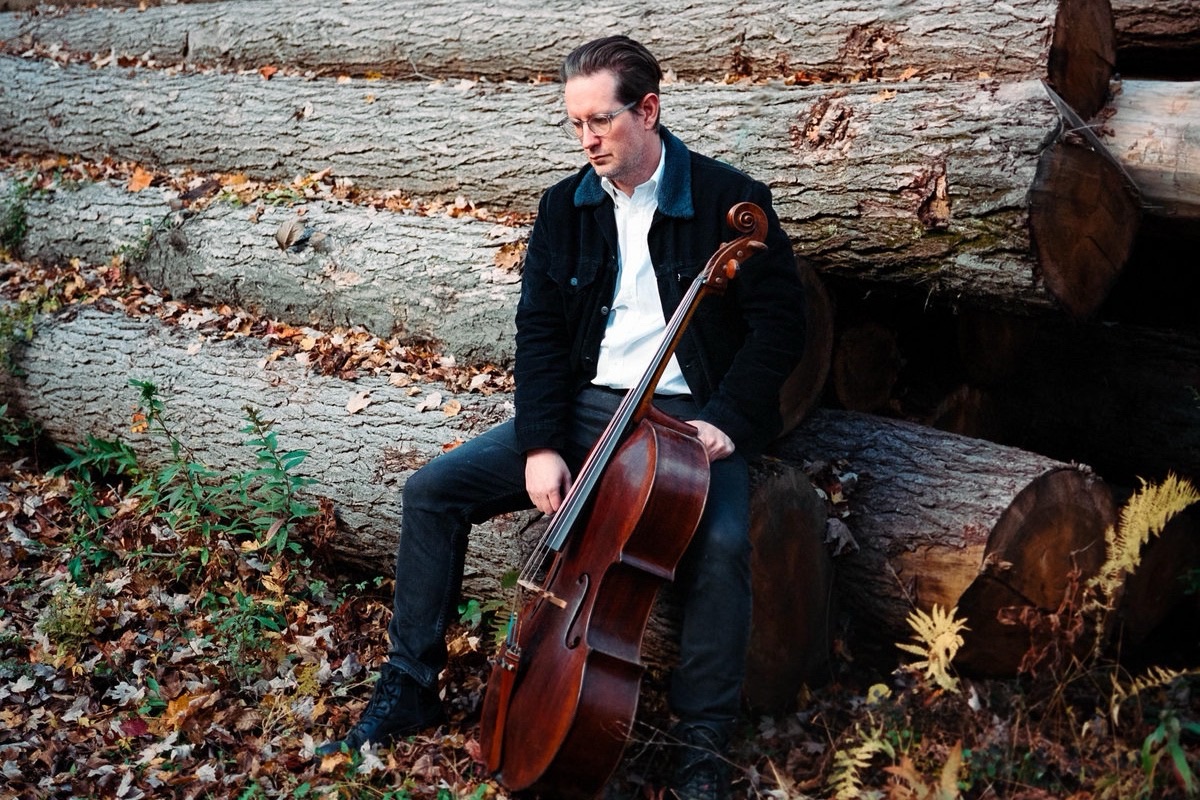

When one thinks of the great artistic cataloging of North American bird paintings, John James Audubon’s name often first comes to mind. That connection makes sense given that his best-known work, the multi-volume The Birds of America (1827-1838), featured four hundred and thirty-five paintings covering four hundred and eighty-nine species. Painting that many birds was a formidable feat, no doubt, but it is dwarfed in quantity by the work of Rex Brasher. Although lesser known, the sheer volume of Brasher’s output – twelve hundred species on eight hundred and seventy-five watercolor paintings – is nothing short of daunting. But even more important was the intricate care and precision he insisted upon. The self-taught Brasher pushed for nothing short of perfection in his work. He destroyed nearly seven hundred paintings when he found himself unsatisfied with them. When technology failed to sufficiently produce his twelve-volume Birds and Trees of North America to his liking, he hand-colored all eighty-seven thousand pages himself. Given his clear love and dedication for his work, it is obvious why other artists could find inspiration in Rex Brasher’s oeuvre. Christopher Hoffman’s first solo cello record, Rex (Out of Your Head, 2026), ostensibly taps into this aspect of Brasher’s life. Yet that is only part of the story.
Hoffman first became aware of Brasher after stumbling upon the painter’s hundred and sixteen-acre retreat in Kent, Connecticut. The rural land, which the painter dubbed Chickadee Valley, was where he finished most of the work later in life. And it is largely the land itself that is present on Rex, with Hoffman looking less at Brasher’s specific works and more at the sights that made him who he was. In so doing, the tracks reveal a deeper understanding of the artist’s underlying humanity.
Brasher was not some automaton who cranked out painting after painting. He was a man who experienced both great joy and sorrow. The playfulness of the gently plucked “Pal” evokes the games of fetch Brasher once played with his canine pet for whom the track is named. “Marie”’s reflective tenderness suggests the great love Brasher had for her. “Resting Place,” however, shows the pain suffered when both left this life.
The painter was seemingly driven to artistic perfection not out of braggadocio or obsession but a deep reverence for the natural wonder that enveloped him daily and a desire to share it with those who may never experience such beauty firsthand. Fittingly, the introspective lyricism of “Snow Owls” and the gliding gracefulness of “Swallowtail Kite” reflect both paintings and their subject matter.
Part electronic, part acoustic, over the last several years, Hoffman has developed one of the most distinctive voices on the cello. Rex finds him using his idiosyncracies to soar to emotional depths never before explored in his work; themes of love, loss, and the need to cherish the moments around us. While Hoffman was initially hesitant to release a solo cello recording – there are too many great other ones already out in the world – his concern was for naught. Rex rules alongside the best solo cello records.
PostGenre: How did you first learn about Rex Brasher?
Christopher Hoffman: My partner and I were moving out of Brooklyn. I really wanted to get out of the city. We found a place on Zillow. We went up there, and I met a guy named Matthew [Schnepf], who showed us Rex’s house. When he did, he told us that Rex Brasher lived there. At that point, I didn’t know who Rex was, and Matthew sent me a Washington Post article about Rex. That’s how I first learned of Rex.
I then found a two-volume set of Rex’s Birds & Trees of North America, which is not as nice as the full twelve-volume set that was originally produced. And with that, I started digging deeper into Rex’s story. The house is incredible, and it comes with a great history.

PG: The twelve-volume set has a fascinating history. Because of limitations on high-quality color printing when the set first came out between 1929 and 1932, he personally hand-colored all the released copies. That level of dedication by an artist to their art is incredible.
CH: It is. But that level of dedication was common for him. He had also painted about half of the birds for the book, but before he sent them to get printed, destroyed all of the prints and started over again because he couldn’t get the feathers to look right. Clearly, he was on another level.

PG: Do you feel that being at his home, where he dedicated himself to his craft, has changed your music?
CH: Definitely. In a way, I think being there pushed me towards releasing a solo record. For years, I had wanted to release one but was very cautious about actually doing so. There are so many great solo cello records out there that I first listened to in college and in my early 20s. Both improvised cello recordings and all the incredible Bach cello recordings. As far as improvisers, each one is unique. Abdul [Wadud]. [Erik] Friedlander. Ernst Reijseger. Matt Turner. Fred Lomberg Holm. All great, all different. Solo cello is a very deep canon, and I was a little apprehensive about even approaching it. But playing in the house really made me more open to doing so.

PG: How so?
CH: I’d already been doing more stuff on the electric cello, chord-wise. Because it’s got a low F string, the instrument lets you get much beefier chords. I basically wanted to do something that could be a solo performance. I wanted the nature of the pieces to morph a little as I play them live. The electric cello is super helpful with chordal and bassline stuff. It gives it a little deeper dimensional sonic space to play with. It’s also nice to hear some different timbres on the record.
I didn’t set out to sit down and write some music at the house. I simply started playing and recording snippets and seeing what works. Putting together the album was a very organic process, and I think that comes from the influence of the property.

PG: It is interesting how you approached Rex as a subject matter with this album. You could have limited your focus to specific paintings by him. Instead, drawing on your filmmaking background, you approach him like a documentarian. You dig not only into his work but also his family and the places he would visit for inspiration.
CH: Yeah, I’m tuning into him. He wrote quite a bit. I haven’t read everything he’s written, but I read Secrets of the Friendly Woods. Because I know people at the Rex Brasher Association very well, I have also learned a lot about him from them. There are also people living in the area whose parents grew up knowing him. He used to make bird-looking door knockers and would walk in snowshoes down the road to visit neighbors and sell the knockers to them. I have been able to learn a lot about him, and had heard stories about him. Those have definitely become a part of the album. I didn’t put all of his paintings in front of me and try to put into music my feelings from looking at a particular painting.

PG: “Snow Owls” and “Swallowtail Kite,” which were inspired by two specific paintings of Brasher’s, when writing the pieces, did you keep in mind the sounds of those birds’ calls?
CH: No, that was completely outside of what I considered. Early on, I started thinking about birds and wanted to make sure I was careful about bird sounds. I was worried that using them would push me into making a more atmospheric record. I purposely stayed away from trying to use the actual sounds of the birds. However, I will say that there are so many birds on his property. I don’t think I’ve ever been anywhere where, on a daily basis, I can see twenty different birds moving around. And then hear many different owls at night too.
PG: You do, however, draw inspiration from Brasher’s poetry for a piece like “Spindrift.”Did you take into consideration the cadences of his writing when composing the pieces inspired by his poetry?
CH: His cadences definitely affected me more than bird sounds. Because I was reading his poetry at the time, I’m sure it’s on the record in some way. He has a very humorous, and a little bit devilish voice. And I think that can be heard on the record to some extent.
But back to the property, it is a hundred and sixteen acres. It’s a massive piece of land. When we first got here, Rex’s nieces had been living in the house up until 2020. They had a map of the property with little monument landmarks. Some may have even been marked by Rex himself, with the rest by his family members who’ve lived there. My daughter and I would walk around looking for stuff on the map, and ultimately found a graveyard where his dog, Pal, and his partner, Marie, are buried.

PG: Which gave you inspiration for “Resting Place” and also “Pal.” Did you reflect upon your own family when examining Brasher’s?
CH: Totally. “All Together” also focuses on those relationships, as well. I was at Rex’s house with my partner, Stephanie, my daughter, and our dog as I read about Rex and found his family’s resting place. Things were all blending together to me. I try not to spend too much time overthinking the record because I feel like Rex is not really a concept record. I am more focused on the fact that I am in this space, vibrating in this same world as he did, as thoughts about him or my family pop into my head. It was the exact opposite of sitting down in a nice place and structuring out what I planned to write. It all came so naturally.


PG: Was that decision not to make Rex more of a concept record also what was behind your decision to include “Heavy” as a piece even though it is dedicated to the late Anthony Pinciotti rather than something from Rex’s life?
CH: I started recording the record in November of 2024. I finished recording it in early January 2025. I had the luxury of working on the record whenever I felt like it, so I took a break between November and January. Anthony died on Christmas Eve of 2024, but I didn’t find out until a few days after. By the time I was finishing the album, his passing was occupying most of my mind. He was a special dude for anyone who knew him and hung out with him. And the piece “Heavy” came together very quickly for me as I thought about him. I didn’t want to kick the piece down the road for another project, so it ended up on the album.

PG: In terms of your solo performance in general, it was Henry Threadgill who pushed you towards solo live performance. As someone who has worked with him on several projects now, what do you feel you have learned the most from Threadgill in terms of composition that could maybe be heard in your solo work?
CH: That’s a great question. Well, so I played a solo set for Tomeka Reid’s Chicago Jazz Strings Summit during the pandemic. Henry tuned in to watch and encouraged me to do more stuff like that performance. He had many reasons why he thought I should do more solo work. And when someone like Henry encourages you to do something, it is worth listening to him.

As far as things I’ve learned from him – besides the details of his really amazing orchestrations – is more of his flexibility. This is true of any of his ensembles, but with Zooid, when we work on a piece, we may work on it a lot. But, even so, he will still sometimes set it aside if he feels like it is not ready yet. He may come back to it later. He may not. But he waits for the music itself to be ready. I think that is a great example. If you’re not feeling something, move it aside.
There are definitely more pieces that didn’t make Rex that I thought were cool at one point. But as I continued to work on them, they no longer fit what I was going for or weren’t fully realized. I think that the ability to step back and be discerning on some level is incredibly important. I learned a lot of that from Henry.
‘Rex’ is out now on Out of Your Head Records. It can be purchased on Bandcamp. You can read more about Christopher Hoffman on his website. You can also learn more about Rex Brasher from The Rex Brasher Association.


Leave a Reply