


|
Getting your Trinity Audio player ready…
|
Folk music is often broadly defined as being a music “of the people.” But what does that really mean? Of course, the generally understood definition implies that it is music not of the conservatory or the upper strata of society, but from the average person, one of the commoners. But the descriptor of the music being “of the people” is inherently problematic. In the words of Louis Armstrong, “All music is folk music. I ain’t never heard a horse sing a song.” Satchmoic witticism aside, the issue of what defines human music has been increasingly muddled over the last decade. In an era where artificial intelligence can not only write and perform music, it seems possible to have non-human-made music. Or consider the robot Shimon, which not only plays the marimba but also, seemingly, improvises in response to human musicians. The line between music of the people and of non-people seems clearer than ever before. Or is it? Unpredictably, Lucian Ban, Mat Maneri, and John Surman’s Cantica Profana (Sunnyside, 2025) and The Athenaeum Concert (Sunnyside, 2025) tap directly into this issue.
To fully appreciate the last sentence, one must first understand the overall concepts of both of these albums. An interview with Ban and Maneri on Transylvanian Dance (ECM, 2024) and a review of both of the new releases provide a much deeper contextual background to these works. But with the broadest of strokes, Cantica Profana and The Athenaeum Concert are live recordings of pianist Ban, violist Maneri, and legendary woodwindist Surman exploring and building upon Béla Bartók’s transcriptions of Transylvanian folk songs. The original works at the heart of the project were overwhelmingly vocal, coming from the most natural of instruments. Before we can walk or even know what instruments are, there is the vox, the most basic tool of human oral expression. As such, the mere fact that Ban, Maneri, and Surman approach these tunes through strings and reeds inherently removes them to some degree from the raw humanity that created them.
Add the fact that any three artists will inevitably bring their own particularized interests and tastes to any project. Sometimes, especially for a live recording, these even include emotions unique to that particular day. In the case of The Athenaeum Concert – an absolutely gorgeous recording – the three musicians knew it was to be one of Surman’s last public performances, and it would be ignorant to assume the emotions tied to the moment at hand would not enter into their performance. However, the differences in personal preferences are particularly stark when the artists at hand come from significantly different cultures. Each of Ban, Maneri, and Surman grew up in different parts of the world – Eastern Europe, North America, and Western Europe, respectively. The diversity of their backgrounds adds a unique element to their collaboration, but it also further removes their meetings from the more insular perspectives of the Transylvanian people, even if one of the trio grew up there as well.
Now, consider something even more intangible, the space in which the music is performed. Bartók found his musicians primarily in peasant houses and on porches. These were small, humble places where the music was allowed to speak for itself. On both Cantica Profana and The Athenaeum Concert, the trio is not in such spaces, but instead in grand concert halls and theaters. Visually and acoustically, the environments where the trio performs – particularly on The Athenaeum Concert, where they are at Transylvania’s incredibly ornate main music hall – are like night and day to the humble beginnings where the pieces were born. And to a large degree, such environments can be heard on the recordings. The spaciousness of the Roman Athenaeum allows the artists to let notes linger and resolve in ways they couldn’t elsewhere. One may even be so bold as to state that the building itself provides a fourth, albeit subtle, voice to the recording.
To recap, with both Cantica Profana and The Athenaeum Concert, Ban, Maneri, and Surman provide timbres removed from the original instrumentation, add cultural and personal influences not originally contemplated, and relocate the music to wildly different environments. And yet, the music across both records retains an ineffable quality that ties it back to its role as a music of the people. The heart of the original folk songs – what originally led Bartók to transcribe the music – still shines through the two recordings. The trio finds ways to stretch and pull the pieces to incorporate a humanity that is larger than a particular place or culture. As a result, the countrified blues of Athenaeum’s “Dowry Blues” or the Eastern microtonal influences on Cantica’s “Dowry Song II” seem fully at home, even if not in the original transcriptions. How is it possible that the pieces can be so malleable? The fact that three master musicians are behind the albums is worth noting. But one must also consider that instruments, cultures, and buildings are nothing more than tangible or intangible reflections of those who created them. The same humanity that creates music also formed all these objects. It also crafted machines and computer languages. As stated in our last conversation with Ban and Maneri, their work with Bartók’s transcriptions is “ultimately…. human music, and that is what makes it so beautiful.” It is that same humanity that maintains it as a music of the people, regardless of how arranged or where presented. Perhaps, as long as human fingerprints are on a work, it shall always remain the music of the people.

PostGenre: What was behind the choice to release two different albums together instead of releasing one, then waiting a bit and releasing the other?
Mat Maneri: Well, the LP, The Atheneum Concert, itself was such a unique concert in its own right. We wanted to preserve it as a concert and put it out on vinyl. We always wanted to release a live performance of ours on vinyl. This performance took place in what is perhaps the most beautiful hall we have ever seen. It had a great sound.
But we also had all this other material that ended up on Cantica Profana. It all seemed to work out once we decided to release an album of other concerts we had around Europe and concentrate the vinyl on just the one concert we did in Romania.
Lucian Ban: The LP version includes a booklet with the liner notes Mat and I wrote. It also has photographs from our soundcheck and the hall itself. The Athenaeum is truly a Carnegie Hall-type hall. It is Romania’s main concert hall. And the reason we released it as a single LP was partly that it would be on vinyl. We loved the idea of bringing Sunnyside [Records] back to vinyl. The Athenaeum Concert is Sunnyside’s first vinyl release in, I believe, twenty-five years. The label initially started with a Hank Jones vinyl before it moved to CDs and digital.
But Mat’s right, the Athenaeum is a stunning hall. The acoustics are extraordinary, as you can hear on the record. But, in addition to being in my home country, it was also significant that the hall is in the country where Bartók collected the music we perform. And, further, the concert was John [Surman]’s last major concert before he retired.
PG: Oh wow.
LB: Yes, this concert was in June 2024. After it, he had one commitment with his band for a smaller gig. But nothing else. And then in October, he announced with a press release and interviews in the British press that he had retired. So, the album also captures John’s last major performance. And even John mentioned to us before our performance that he would be retiring not long after. So, all three of us had a “well, this is it” mindset going into the performance.
It was extraordinary for us to tour with him throughout Europe. Because of John’s renown, we played major halls in Europe. Places with over a thousand seats. Mat and I don’t usually play to audiences that large, and instead play at smaller venues with our staff. But with him, almost all of the venues we played – with the exception of Porgy in Vienna, which is a jazz club, but it’s still a large one – were at festivals and stunning halls. We wanted to do the vinyl by itself as a testament to our work together with John and how it was ending.

PG: Do you think there are more recordings with John you may release in the future?
LB: We do have more recordings. But not all of them were multi-track. Our performance at the Berlin Jazz Festival was a stunning recording. For this, we performed at the Kaiser Wilhelm church that the Allies bombed during World War II. The towers of the old church survived the bombing and were used when they rebuilt it as a modern hexagonal church. The church was rebuilt with acoustics in mind. So, while it’s still a live service church for their congregation, it’s also often used for concerts. The festival thought our trio would sound great there, and we did. There was an incredibly well-written review of our performance in one of Germany’s biggest papers, the Frankfurt Allgemeine Zeitung. In the church, there’s a statue of Jesus made out of metal, and the review stated we played something otherworldly with the statue above us. We have a recording of that performance, but it is from the mix board. We released selections from three different sources because we had multi-track from those. But we really think they’re worth releasing as a double release because it’s a testament to our trio being on the road with this music.

PG: One thing you notice comparing these two latest releases to Transylvanian Folk Songs – The Bela Bartók Field Recordings (Sunnyside, 2020) is how much the musical communication between the three of you has evolved and changed. Is that development solely a function of your continuing to play together?
MM: I think it’s mostly from being on the road together and you playing together at several different places. All three of us are explorers, and the way we explore this material will inevitably change over time. Also, each room we play it in is different. Almost everything is different each time we play. The melodies are the same, but the way we explore those melodies, changed as we grew together as a real unit.
It was so lovely to work with John. Sometimes when you meet your heroes, it is not what you expect. You do your thing, and they do theirs. But it is not like that with John. He was such a giving improviser. He really made it feel like it was the three of us moving as a single unit. We were really committed to each other as improvisers, and we changed and went with the flow as we grew together. Working with him was an incredibly lovely experience.
LB: One thing that has changed is that Transylvanian Folk Songs was recorded in Timisoara, which is in western Transylvania. By that time, John decided that he would no longer tour with the baritone sax, which he had done previously. Actually, he told us that in Timisoara, he wouldn’t be playing baritone. And then once we started touring Europe, I remember we asked him, so we know he’s not going to tour with a baritone. Mat and I offered to rearrange the pieces for his part to be played on another instrument, and he told us not to bother. He said he would figure it out himself while playing, and we wouldn’t notice a difference.
That was quite a big leap, from baritone to bass clarinet, but his decision to handle it himself took a weight off of us. We could rearrange the music, but it wouldn’t be easy to do. Having him make the call on what to do to the music was good for us. But he was truly right when he said we wouldn’t notice we hadn’t rearranged the music. It also opened up more opportunities because, now, he could freely switch between bass clarinet and soprano saxophone on the same tune. He would switch between them in ways that we, as arrangers of the piece, never planned.

MM: Things we had never thought of, yeah.
LB: John would play, and we would be absorbed into what he played. It was so poignant and startling.
And Mat is right that John didn’t play the part of the star in the trio. He was fully with us in every respect. He was very generous and a fun person to be around. He also has that British humor. And he would regale us with stories of when he played with McCoy Tyner and [the Duke] Ellington Orchestra. I did not know that he did some stuff with Ellington. It was really amazing for us to be with him.
Each hall we played in was indeed a different experience. A couple of days ago, Mat and I were in Saranac Lake, a little resort town in the Adirondack Mountains. The town is famous because it is where people went for treatment for tuberculosis before there was a vaccine. There’s a sanatorium in Saranac Lake by someone named Trudeau that many people would visit to try to get cured. Mat and I visited the town because Bartók stayed in a cottage in town and composed both his Third Piano Concerto and his Viola Concerto. We had previously gotten in touch with Historic Saranac Lake, a historical society there, and they invited us to visit. While there, we played in a very small café and, for some reason, it made me think about when we were in Europe with John and how we performed at all the halls there. In Switzerland, we played at a two-hundred-year-old theater. And then in Budapest, we played in a super modern hall that [Viktor] Orbán built. That hall is shunned by the intelligencia in Budapest because it’s considered Orbán’s baby, but it is a stunning hall – a leading Japanese architect designed it, and the hall has received many different awards. It’s stunning. And how we played in each, and in this tiny café in Saranac Lake, was different.


PG: Do you feel those differences in places have shaped, as a duo or as a trio with John, how you approach the music in some tangible way?
MM: For me, the space absolutely changes the music. If you’re in a great hall, sometimes you feel freer to let a note hang than you would in a dry room. You can let melodies hang indefinitely sometimes, and that changes how you respond to other people. Some of the rooms we have played have been a little dry, even with outdoor festivals, and the notes just die after being played. But in a room like the Athenaeum, you can feel the breath afterwards. It was so lovely.
LB: The sound of the room in these great classical halls is different from other spaces. The great halls were built with, I assume, some technology developed in the eighteenth and nineteenth centuries, or later, that kept sound in mind. The Athenaeum was built at the beginning of the twentieth century, based on the concepts refined in the nineteenth century in Italian theaters and opera houses. It lets classical ensembles ring more to make up for the fact that there was no amplification. Spaces like the Athenaeum, as Mat said, have natural built-in reverb that makes music ring more immediately. And, of course, that affects the way we play.
The Athenaeum Concert starts with a long solo by Mat. That introduction was not planned. It’s not in the score. What happened was that we did our sound check, and Mat liked the room a lot. When we started the concert, he just started playing that solo with the bell-like thing muted on the strings. That came fully from the room.
In part because of the spaces we were in, the music often followed its own path as the three of us continued to play together. I never planned to play with my hand on the strings inside the piano to mute the strings. But that happened on the road with the trio. Mat also used many other techniques on the road that he did not plan to use beforehand. I also remember that by the time we started touring, John was trying to play microtonally on his horns. Mat can play microtonally by moving his finger, but it’s much more difficult to do on a saxophone. But John tried anyway. John tried because – Mat won’t tell you this, but – John had told me what an honor it was to share the stage with Mat and hear his sound every night.
MM: It was the best compliment I have ever received. It embarrasses me to talk about it, but yes, he said it.

PG: How did you two get hooked up with John to begin with?
MM: I had done a festival for ECM [Records] and met him there. We immediately hit it off. He dug my father [Joe Maneri]’s work. John and I hung out a few times after we met. One night, we ended up just hanging out all night long, closed the bar down, and were the last two standing, just talking. John is one of my heroes, too.
So, when this project initially came up, Lucian and I decided we wanted to have a horn player join us, someone who could alternate between a few different instruments. Without batting an eyelash, we both decided on John Surman at the same time. He was our number one choice, right away. There was no question that John was who we wanted for this project. Fortunately for us, he was very into the idea, and it all worked out. We were very lucky because these things often don’t work out. But John was really into the project, and it worked.
LB: When we first started the project as a trio in 2018, Mat and I would ponder how it would sound to take the folk songs and some things we wrote and play them with John. Mat and I thought deeply about how we wanted to approach these folk songs because we didn’t want to do a fusion kind of thing where you get an embellished or ornamented folk melody and put some jazz hits in it. But we were concerned because folk songs are complicated. Folk songs are not complicated. You cannot hide behind fancy writing. The project takes the courage to let notes stay and ring.
When we ultimately played our first piece as a trio, “Carol,” we were in a dark rehearsal space. We started playing it, and Mat and I immediately looked at each other because we could tell how great we were going to sound together. It sounds easy, but it’s just Surman. He knew how to adjust. I have had the chance to play with a few masters in my career, and there’s something about them. It’s not for nothing that they’re masters. The moment John started playing, blending with us, and bringing new things to the melodies, we knew the trio would be great. And things got better and better the more we have played together.

PG: With John retired now, where do you see this project headed? Only duo performances going forward?
LB: No, we are starting to play as a quartet with [drummer] Gerald Cleaver and bass clarinetist Marco Colonna. But we have had the same challenges with the quartet as we had when first playing with John, because a lot of the original transcribed songs are vocal songs with sometimes two or three singers who don’t perform in unison and sing a little out of tune, with both of those things ultimately becoming part of the character of the tune. And those can be hard to depict with well-tuned instruments played by trained musicians. The baritone [sax] initially seemed like a very good option for approximating the less polished aspects of folk songs because the instrument’s growls in some ways resemble the human voice more than the noblesse of the bass clarinet or the penetrating aesthetic of the soprano [sax].
MM: It’s a testament to John and his lyricism that he was able to bring in elements of certain folk music from England and other places. He had a natural knack for translating the melodies in a very vocalistic way on his horns, all of them approaching the melodies differently but equally. There is always a concern when playing a folk melody with an instrument like a saxophone that it won’t work well. But John interpreted the melodies like he was singing them, just through his horn.
LB: The biggest challenge was actually making sense of the piano for the pieces. The folk songs Bartók transcribed consist of violin songs, all kinds of flute songs, bagpipe songs, and vocal songs. The piano was removed from all of it. For me, the biggest challenge was to find ways to make the piano sound more folksy. The piano is much more likely to stay in tune than a viola or a horn. And that can become a weight when you have these simple melodies. Actually, that is part of why the great pianists – Keith [Jarrett], Bill Evans, McCoy [Tyner], as well as Randy Weston and [Thelonious] Monk with their percussive touch – always have a singing quality in their way of playing. The biggest challenge, and it’s still the biggest one, has been how to make sense of how to play these melodies on the piano.

PG: And, perhaps, because of that focus on trying to incorporate folk elements regardless of the difficulties of doing so based on instrumentation, the music hints at so many cultures, even in different presentations of the same song.
LB: Yes. We decided to have two versions of “Dowry Song” on Cantica Profana and one on The Athenaeum Concert. Same with “Violin Song.” The three versions of each song differ so much from one another that we could have changed their titles and they would have seemed like different songs. In one version of “Violin Song” on Cantica Profana, all three of us play percussive stuff that makes it sound like it is a South African group. It is so different from the other versions. The way the music can change is a testament to the underlying eight bars of music. The folk songs are not long, but we feel like there’s some code embedded in them. That they affect us in such different ways speaks to the power of the songs. It’s not for nothing that the songs changed Bartók’s compositional vision; they have also changed us musically.
MM: Yeah, the melodies are so strong and such a part of a human condition that you can put elements of the blues, North Indian classical music, or anything else into them, and the songs accommodate it. But even when you do, the underlying song never loses its identity. It’s amazing how the songs change and adapt because they are so powerful.
LB: One time, Mat brought a Moroccan melody into a song, and that worked as well. A lot of my grooves come from South America. The flexibility of these songs is so fascinating to us. I’ve never seen anything like it in my life. Working with these songs is so rewarding. There’s something strange happening with them.
And Bartók noticed it too. He wrote about how he found an ornamented type of melody he discovered in Transylvania was also in Morocco. He thought those connections were only coincidental because there’s no way these two communities – one in Eastern Europe and the other in North Africa – could influence one another. Then he found the same type of melody somewhere deep on the Volga River in Russia. There’s something connected in how humans create music. Bartók spoke of how all folk music comes from the same cell. It’s an abstract theory that composers and academics can talk about. However, with these folk songs, we have the living proof.
‘Cantica Profana’ and ‘The Athenaeum Concert’ are both out now on Sunnyside Recordings. They can be purchased on Bandcamp. More information on Lucian Bancan be found on his website and more on Mat Maneri can be found on ECM Records’ site.
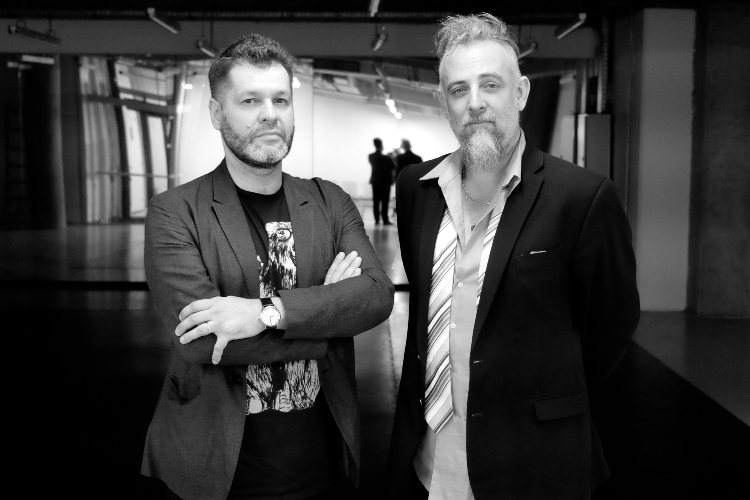
Photo credit: Serban Mestecaneanu


Leave a Reply