

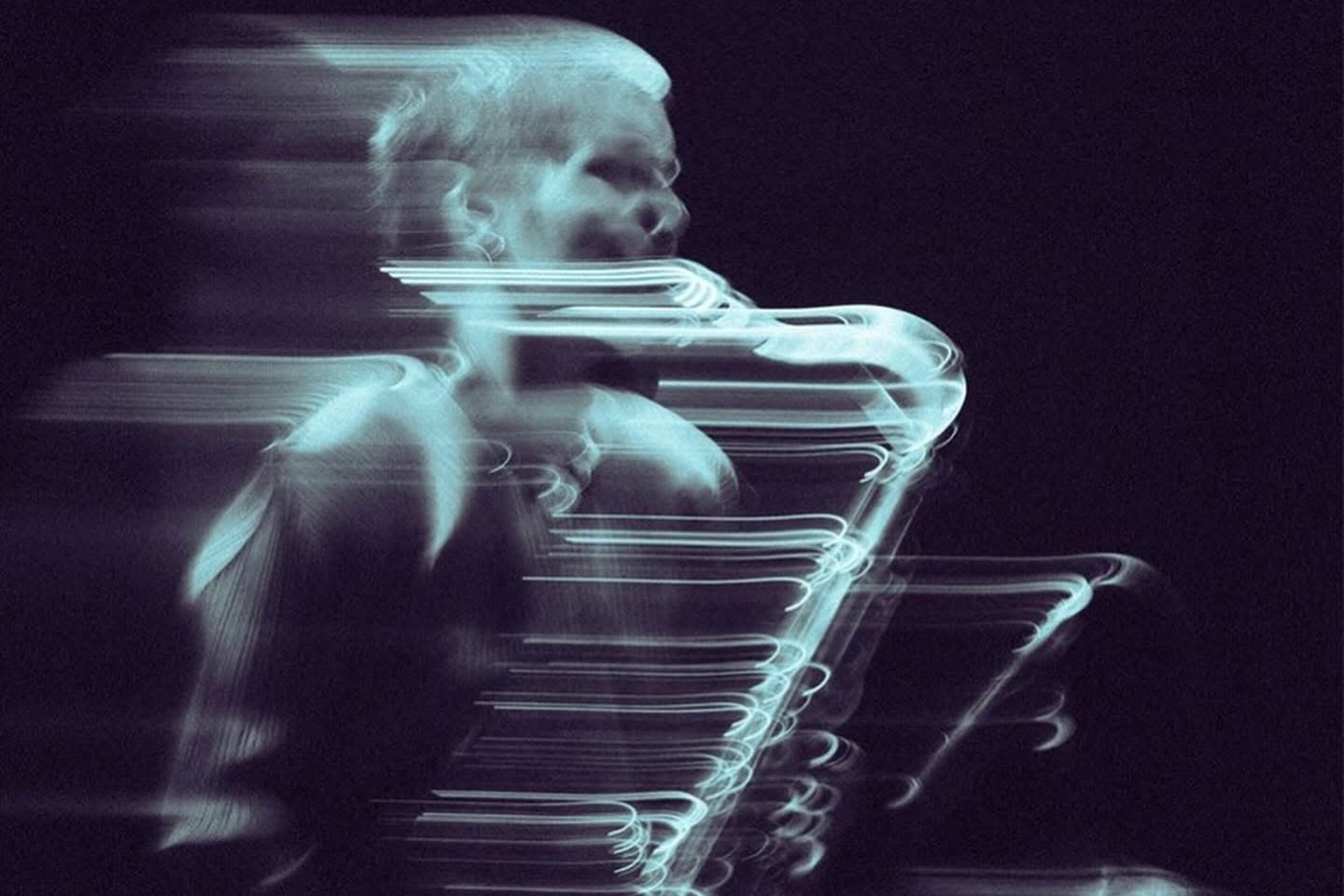

Catholic saint Thérèse of Lisieux once stated, “If every tiny flower wanted to be a rose, spring would lose its loveliness. There would be no wild flowers to make the meadows gay.” To some degree, we perceive something as beautiful because of its ability to step outside of the ordinary. But how do we do so in a field where all flowers grow freely? In a patch of wildflowers, what stands out? To some extent, the same inquiry applies to improvisation-based music. Generations of artists have stretched harmonic, melodic, and rhythmic elements, moving into new fertile grounds. But when such core elements have been moved to their edges, how does one in the area continue to create a distinctive art? The only answer to these inquiries is that the artist makes a work that is true to themselves; that emphasizes their soul’s refusal to be confined more than a rebellious act of defiance against convention for the sole sake of non-conformity. This is sometimes lost on critics in evaluating the work of artists who incorporate free improvisation into their practice. Such is the case of Zoh Amba, who recently released a sixth record, Sun (Smalltown Supersound, 2025).
Still in their twenties, Amba is very much a young voice in the improvised music community. Nevertheless, their talent has led Amba to perform with several prominent figures, including Tyshawn Sorey, William Parker, Joey Baron, and Shahzad Ismaily. Perhaps unsurprisingly, some have painted a target on the Tennessee-based saxophonist’s back for doing so. Phil Freeman’s Burning Ambulance was particularly dismissive, claiming Amba’s notoriety is primarily because as the “latest new face” of the music and accusing Amba of not having an identifiable voice. Essential to his argument is a reliance on how you can hear shadows of the artists who came before in Amba’s sound. No one would argue the lack of influences – who has none? – but this line of argument reveals a very shallow listening of Amba’s work. Deeper time spent in recordings reveals a perspective distinctly Amba’s own. For instance, “O, Sun” off of the album of the same name (Tzadik, 2022) recalls the anthemic marches of Albert Ayler but allows for a playfulness and opening to space and silence not typically associated with the latter’s work.
For those who struggle to pick up on subtleties in prior output, Amba’s Sun further elucidates their idiosyncratic voice. The majority of the record finds Amba joined by three other late-millennial early zoomer artists – pianist Lex Korten, percussionist Miguel Marcel Russel, and bassist Caroline Morton. The new quartet dives deeper into Amba’s folk moorings than in any prior recordings. In the process, the ensemble deftly underscores the music’s connections to the wonder of nature. In “Seaside,” a listener can hear waves crashing ashore and the wind blowing slowly and gently through salted air. “Champa Flower,” named after a plant that in Indian culture denotes purity, finds the leader putting the horn aside entirely. Hopefully, the first of many recordings by Amba on guitar, it provides an earnestly beautiful ride through the natural splendor of the countryside.
However, Sun shines its most radiantly on the other third of the record, impromptu moments where Amba is unaccompanied. With one hand on horn and the other on the piano, the artist reveals their spirit at its most raw. These pieces – “Ma,” “At Noon,” and the closing “In Heart” – were born out of a time of deep spiritual reflection at a convent of the Advaita Vedanta, and one can sense that background. These pieces are deeply intimate moments where the artist lets their guard down for those willing to listen – not merely hear – what Amba is trying to convey. In all, Sun is a deeply intimate work that reveals both the breadth of Amba’s voice and the warmth of the artist’s heart.

PostGenre: Your new album is called Sun, and you also had an earlier one called O, Sun (Tzadik, 2022). You have expressed in other interviews how nature, in general, is a very important part of your music, but why the sun specifically?
Zoh Amba: Yeah, I’ve got two sun tattoos on my arms too. When I was young, I used to stare into the sun. Nothing would exist on our planet without the sun. But the sun also makes my heart feel so warm. I’d sunbathe outside every day, all day, if I could. And, in the morning, when the sun rises and the birds are singing, that is the sweet thing. The sun brings me so much warmth and love. I hope that by the time I die, I can fully express my feelings about it. But trying to express them is why I play music.

PG: After you recorded your first album, Bhakti (Mahakala, 2022), you had thought about leaving music to become a monk. Is it the power to convey your feelings that made you decide to stay with music instead?
ZA: I think I decided to stay with music when I started touring. Playing my music live, I could see how it was reaching many souls. It made me realize how much music fills the heart with love. Seeing that, I felt like maybe that was why I’m here. That maybe leaving the music behind was a mistake. Loving God and playing music aren’t mistakes. I think something switched in me, but I realized that if I could help somebody’s heart feel a little love in this life, maybe that is what I should do. It just felt like I needed to share the music. But I have had an interesting relationship with music. My purpose is not to be a great saxophone player but a great person and maybe music is one great way to do that.

PG: Sonny Rollins said something similar- “Music was not my purpose in life. My purpose in life was to be who I am. If that meant some prominence as a musician, fine. But I am here to be a human being beyond just my profession as a musician.” Where do you see music’s role in your quest to be a great person?
ZA: That’s a beautiful question. I can’t fully answer it because I hope to fully figure out, in the time I have left here, what music is actually doing to me and why. But music fills my heart with so much love. Music takes me into myself – into my soul – and hears the things that are real and true in this world. I had a very difficult upbringing, and music has been something that has healed so much of the pain I was carrying. A lot of it I still carry and always will. But music has been able to grab my heart and soul. I remember being younger and listening to many great souls’ music. And hearing them talk so honestly about where and how they grew up. That helped me understand better. It gave me something to hang on to.
I think many journalists drive me insane. Many writers say some very hurtful things. I’ve been trying not to read anything about me or think about any of it, and instead just try to share music as honestly as I possibly can. Many people mention Albert Ayler when they hear my music. But I never transcribed anybody. I have never tried to play like anyone besides myself. Trane and many others have had a huge influence on my soul. I listen to all their interviews and just sit with their words. I have listened to what they were trying to do with the little life they had on this planet.


And when I got to Albert, he really reached me. His box set has an interview where he’s talking about his father beating him and his tears running down his legs. I distinctly remember the tone of his voice when he spoke about it. He was so strong yet so honest and pure. It reflected every part of his beautiful soul. I think one thing that he tried to do was reach God through his music. And he did. I think he reached it. Even without music, I think we all do. I think that was a big part of what he was trying to share – that we all have God in reach. And that’s not based on something you play or do. So, I get a little upset when critics say that I’m some kind of wannabe. Some of those same people stand on Albert’s name and praise him without fully grasping what these sacred souls endured and went through.
PG: Your music instead must, and does, tell your own story through sound.
ZA: Yeah.

PG: And you can certainly hear that on Sun. How did the album come together?
ZA: One thing I did with this particular band is that when we first got together, I just listened to the other musicians play. I didn’t say anything. I just listened to them as a trio and wrote music based on what they did together. I joined in only after I saw what natural tendencies were happening, and my ear or my heart would find something to go with it that felt very strong. The songs were things we worked on and discovered together. All of my other records are fully improvised, but with this one, I wanted us to use more of a structure.
PG: So, you were almost using a precomposed structure in a way, instead of freely improvising.
ZA: Sort of. I’m not generally a person of structure. Working with this band is very different from what I’ve done before because we are using a different way to find natural structure together. It was very important that the structure comes from what we would play together naturally as it ensures no one in the band is put anyone in a box or made to do anything they wouldn’t already. Instead, in putting together the structure, I tried to hear the highest beauty and the lowest beauty – all beauty – of our souls.
PG: Even though there was a structure, it is very tied to the specific musicians in the band.
ZA: Definitely. Miguel [Marcel Russel], the drummer, is one of the greatest human beings I’ve ever met in my life. We’ve been playing music together for a long time. The sax and drum relationship, in general, is a sacred thing. Miguel has also worked with Emilio Modeste, a great saxophone player in town I’ve known for a very long time who is also one of my buddies. But that relationship between sax and drums fuels me for everything that I do.
And then Lex Korten came in [on piano]. Nick Dunston had recommended Lex to me. And I started going to hear him play everywhere. The universe kept bringing Lex and I together, and we started playing together. Playing with Lex feels like a security blanket. He is like a big brother to me. Honestly, our band is like the biggest, sweetest family and I’m so grateful to have met everyone in it.

A lot of our magic comes out when we play live. It’s hard to make a studio record of what we do. I had a hard time putting Sun together in the studio. But live is where the magic happens. On the album, we are trying to capture a little bit of that live magic.
We also needed a little more material for the record. So, I recorded different sessions with myself where I would play piano. I have an upright piano that I got for fifty bucks down here. I played piano with my right hand and the saxophone with my left. So, a significant portion of the album is just saxophone and piano, with me playing both together at one time. “Ma” is one of those moments. That track is actually the first thing I sent to Mr. Wadada Leo Smith to say “hi.” The last track of the record, “ln Heart,” is another where it is just me on piano and sax.

PG: Is it difficult to play both instruments simultaneously?
ZA: Well, I think for me, it’s harder playing solo saxophone. When I’m putting clusters down on my right hand, it supports my horn a bit. As far as the sax, if you blow hard enough, you can get anywhere on it, even with just your left hand on it. When I was recording these pieces on sax and piano, there were moments where I had tears running down my face. When we were snipping off parts of these pieces, those moments where tears ran down my face were the ones that made the record. I tried to make a deeply personal record that felt very intimate and loving. Some people say it is not as intense of a record as my others, but I feel it is as intense as anything else I have done. It won’t speak to everyone, but if they sit with it, it might.
PG: The problem is that a lot of people are impatient and won’t wait for music they hear to unfold for them.
ZA: That’s right. I just performed with a version of this band, but with only three of us – piano, drums, and sax. Some people were leaving early into our performance. I used to start performances by prefacing to audiences that if they do not immediately feel the music or if it makes them feel uncomfortable, that they should sit with it for a minute and give it a chance. They should sit and try to understand. One of my elders told me I shouldn’t preface the music. And they’re right, but it is hard to reach some people because they are not patient.
PG: For some people, it is almost as if they would prefer not to understand what they hear or broaden their horizons through listening.
ZA: Yeah. I remember we were in Spain one night, and when I walked into where we were playing, I could tell – I had radar – that it was gonna be a hard night to reach people. But we decided to push through it. Then some old – seemingly rich – white guy in the audience screamed at me, “Your music is for drug addicts,” and started booing us. But while he did not get what we were doing, I saw that the people in the front row were crying. They had a love for what we were playing. So, we ignored the guy and just kept going. Even as he kept yelling nasty stuff.
PG: Clearly, he also did not understand the history of the music if he belittled addiction, given how many artists over the years struggled with it. Charlie Parker alone revolutionized improvised music and had a serious drug addiction.
ZA: I know. He clearly did not know where the music comes from, historically. But his yelling still upset me. I talked about it publicly because people were going crazy. The next day, I left my hotel room and walked to the ocean. People were coming up to me and had heard of what had happened, and told me the way he acted was insane.
But you keep moving on with your music. You don’t give up because some older, rich white man screams at you. Not the first time. Probably won’t be the last, Mr. [Wadada Leo] Smith told me something similar happened to him and his band. And they, too, tried to do the best they could. You just keep going.

PG: You mentioned earlier how Sun is more structured than your other albums, which were more freely improvised. However, Wadada does not really distinguish between improvisation and precomposition, instead calling both “creation.” Do you agree with his perspective?
ZA: Yeah, I agree. I mean, I hate the term “free jazz.” I like to call it “spiritual” or “devotional.” “Avant garde” means you are trying to go against the grain, but we’re not trying to go against anything with this band. We are just trying to get to what is in our hearts. But I especially dislike the term “free jazz” because I’m not improvising anything. What I play is all things I’ve been working so hard on; none of it comes out of thin air.
But I think the biggest reason many of us dislike these terms is tied to how the universe has put them into different brackets that are not loving or good with what we’re doing. I’m not blaming the word itself. I’m blaming the government. I’m blaming society. I’m blaming all those who use labels to attack us.
PG: The press materials for Sun speak a lot about Peter Brötzmann, who was also not a fan of terms like “free jazz” because he saw them as, in his words, “bullshit… invented by journalists.” Where does Brötzmann fit into your musical picture?
ZA: I love Brötzmann more than anything in this universe, really. I once sent a letter to his house with flowers in it and told him how grateful I was for his sound. I never heard anything back from him. But later, Fred Lonberg-Holm was visiting him, and I wrote to Fred and asked him to ask Peter if he would accept a letter. Fred did and told me that he said he would, so I sent another with flowers in it, and still got no response.
Then came my first tour of Europe. It was with Micah [Thomas] and Chris [Corsano] about a year before [Brötzmann] passed away [in 2023]. I sent an e-mail to an address listed on his website. I figured there was no way it was his email. It looked like a random address, and figured it was probably his manager’s or something. But I got an e-mail that night in response, and it was from him. He said I could come visit him. So, I visited him in Wuppetal [, Germany, where Brötzmann lived most of his life].
Right before I was able to visit him, my horn broke. I was playing so hard on our tour that it broke. I brought it to someone who repairs instruments, and they said that everything looked fine and didn’t know what the problem could be. But I knew something was wrong even though it didn’t look broken. So, I called Brötzmann and told him I didn’t know what to do. He told me I should go to someone in Cologne [, Germany] to fix it. I couldn’t fit into our tour schedule both a trip to Cologne and one to Wuppetal. I insisted on seeing Brötzmann, even if it meant playing a broken horn for the rest of the tour.


PG: So, you played with a broken horn for the rest of the tour?
ZA: Well, eventually, I went to Brötzmann’s place. I rang his doorbell and heard his boots walking across the floor as he came to open the door. When he opened the door, I hugged him so tight and cried. He told me to come in, and he made us some tea. We mostly sat in silence.
I asked him what made him happiest in life. I didn’t ask many questions, but that was one of the only ones I did ask. He was frowning but then looked up, and his frown turned into the biggest smile. He looked out the window- he had a huge window in his apartment – at a big tree with the sun pouring over it. And that was it. We didn’t really talk much.
But he had a surprise for me. He had a guy there to fix my horn. Brötzmann had the same problem I did, and the guy there was able to fix his horn.

PG: What was wrong with the horn?
ZA: It was a thing some of us saxophonists have that others don’t, which is not a good problem to have. But the problem comes from playing high notes. To get to high register stuff, you push down on the mouthpiece, which can make the neck bulge out on both sides. It’s very subtle, but it can make the octave key not work. Though it’s not just an octave key issue; it holds back on the horn.
Brötzmann offered to let me borrow one of his horns if it couldn’t get fixed but the guy was able to fix it. I played the sweetest melody for about three minutes for Brötzmann to test out the instrument after it got fixed. I was not about to blast the horn at him. That felt disrespectful to him. He was the king, and I was not gonna blast him. And what I played made him smile. But that day, Brötzmann and I really connected. I gave him probably five hugs before I left to go to my next gig. After that, we started emailing all the time. And then right before he passed, [his son] Caspar [Brötzmann] shared some of my music with him. And he wrote to me.

I’m so grateful I got to meet him at a really precious part of his life, in a precious transition in his life. He was a precious soul and you can hear that in his music, too. His record with Heather Leigh [Sparrow Nights (Trost, 2018)] is an especially beautiful record. I miss him.
Every time I play, I always think a lot about the great souls that came before on the horn and try to recognize this deep lineage and keep a deep gratefulness for it all. I believe that every single night on the bandstand, we are searching – just as they did – for every single thing that every other soul is searching for. I hope that people can come and give the music a chance, and let it sit in their heart. If they give it a chance, the music will grow a flower in the heart. I promise.
‘Sun’ is out now on Smalltown Supersound. It can be purchased on Bandcamp. More information about Zoh Amba is available on the artist’s website.


