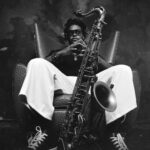

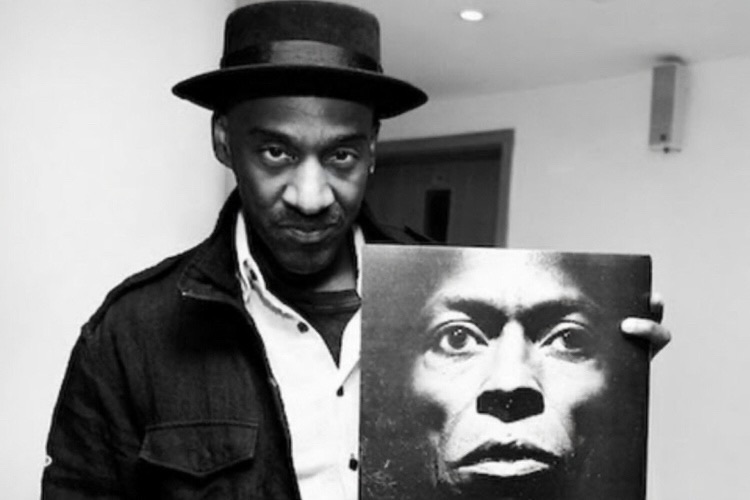

Few figures have shaped the course of modern music as much as Miles Dewey Davis III. His chameleonic career can be seen as a throughline of innovation. In the half-century that was geopolitically known as the Cold War, there is hardly a sub-genre of jazz not radically reshaped by Davis. Bop, cool, third stream, hard bop, free jazz (albeit a more restrained version of it), and fusion all have Miles’ fingerprints on them. Even more, his shadow casts to areas well outside of the critically demarcated lines of jazz. The trumpeter presaged the atmospheric approaches of bands like Radiohead, the Red Hot Chili Peppers, Wilco, and Steely Dan. Experimentations with tape loops, synthesizers, and electronic textures laid the way for trip-hop, drum ‘n’ bass, jungle, ambient, and other electronic music. When Miles went electric, he helped shape the grittier psychedelic side of funk that Prince, Rick James, and P-Funk would take to the extreme. His rejection of the status quo and use of noise even shaped punkers like Henry Rollins and Johnny Rotten. And so, the centennial of Miles’ birth on May 26, 2026, has predictably resulted in countless tributes to the Dark Prince of Jazz. And yet, these celebrations often overlook an essential part of his sonic legacy. We hope that this piece, an unreleased conversation with Marcus Miller from January 29, 2021, better reveals the full extent of his innovations.
Critical analyses of an artist’s work all too often emphasize a single album or a string of them. For someone as innovative as Miles, this tends instead to be a particular era of his career. Three tend to particularly dominate the conversation: his First Great Quintet – with John Coltrane, Red Garland, Paul Chambers, and Philly Joe Jones, the Second Great Quintet with Herbie Hancock, Wayne Shorter, Tony Williams, and Ron Carter, and his earliest electric experiments on albums like Bitches Brew (Columbia, 1970). Lesser discussed outside of certain musicians’ circles is this author’s favorite, if forced to choose, era of his deeper experimentations from 1971 to 1975. This period covers the Cellar Door Sessions (Columbia, 2005), his Lost Quintet, On the Corner (Columbia, 1973) – once the most hated album of Miles’ albums, and moving into working with Sonny Fortune and Sam Morrison. However, the passage of time has also produced throngs of lovers of these works as well. Even more sidelined in popular conversation, at least in America, is the period that succeeded it.
Battling ill health, by September 1975, Miles retired from music. Several efforts to record emerged in the years since, to no avail. Until 1981. That year, he reemerged with The Man with the Horn (Columbia, 1981), an album that featured two bands. The first, the Chicago Group – Vince Wilburn, Jr., Randy Hall, Felton Crews, Robert Irving III – was the one to truly coax the trumpeter out of retirement. Their sound together was light and pop-focused. The second group – out of New York, which consisted primarily of Mike Stern, Marcus Miller, Al Foster, Mino Cinelu, and saxophonist Bill Evans – was heavier-sounding and edgier. While members of the Chicago band, particularly Wilburn and Irving, would play prominent roles in the last decade of Miles’ career, it was the New York group that would truly announce the beginning of his last musical decade. When he returned to live performances at Boston’s Kix Club in June 1981, it was this band that accompanied him.
But the Miles Davis of the 1980s did not sound the same as the one who wowed the crowds by playing “Round Midnight” at the 1955 Newport Jazz Festival. He even sounded different than when he worked with Gary Bartz in the early 70s. No, Miles’ music at the beginning of the Reagan era was different. The man himself had changed greatly. Unfairly, many took these changes as a reflection of artistic inferiority. Stanley Crouch, for instance, referred to Miles as “the most brilliant sellout in the history of jazz” and of having “turned butt to the beautiful in order to genuflect before the commercial.” Chief among these criticisms were two recurring themes- that Miles’ still somewhat poor health keeps him from creating substantive art and that the work he was making was primarily a cash grab that put aside artistic merit. Both claims, however, fall flat.
The mere fact that an artist is ailing during creation does not itself make the resulting artistic expression somehow substandard. J Dilla’s magnum opus, Donuts (Stones Throw, 2006) critically reshaped hip hop as a compositional form and was created entirely while he was on his deathbed. Duke Ellington’s Sacred Concerts, some of his most emotionally profound work, also came as he lay in a hospital bed nearing the end of his life. The idea that an artist must be in top physical form to create art of brilliance is nonsense.
So too is the claim that his 80s work was designed to angle for a quick buck. Given the admiration for his earlier works, the quickest path to profitability would have been to simply revisit his greatest hits. He easily could have got together a band to revisit the pieces on Kind of Blue (Columbia, 1959) or Miles Smiles (Columbia, 1967). Or he could have chosen to solely release albums with some of the biggest names in pop of the era. But, he did neither. Instead, he assembled a band of younger artists, most of whom were not household names. Those are not the actions of someone chasing a dollar. Miles did embrace the newest equipment – drum machines and synthesizers – into his new sound. But such is a mere continuation of his longstanding interest in technology, which is also evident back in the tape splicing he once did with Teo Macero. He explored some covers of the hits of the era – most notably “Human Nature” and “Time After Time”- but is using those as a ground for improvisation really all that different from when he did the same with “If I Had a Bell” or “When I Fall in Love”?
Ultimately, critical thinking reveals the Crouchian complaints for what they truly were: propaganda to support a failed puritanical crusade. Instead, the music of Miles’ final period should be reviewed with an open ear and a free mind. Doing so, particularly in light of the music of other artists that has come since, reveals that the genius even at his weakest state was still creating at a level few could even consider. Although his work does sound markedly different from what came before, it is no less emotionally evocative or mentally enlightening. What you are about to read is a conversation with Marcus Miller, one of Miles’ closest collaborators on some of his best output during the period. It was originally designed as part of a now-abandoned series for our site defending Miles’ 1980s music. Hopefully, readers will be inspired by our conversation to examine the entirety of Miles’ career, not only the portions that are disproportionately emphasized in the press. Doing so will reveal the full extent of his lifelong genius, something that still guides artists today.

PostGenre: A lot of Miles’s 1980s music has been unfairly criticized. What do you think is the true origins of those criticisms?
Marcus Miller: Well, I think he got criticized every time his music changed. What he did was so incredible that when he switched it up, people felt abandoned. And, honestly, you can’t blame them for being upset. When the things you love are abandoned, it makes you feel irrelevant on some level.
The other issue concerns the musical revolution that occurred in the sixties. During that period, the African elements of music began to dominate pop music and jazz compared to the European elements. That is why people were upset that Frank Sinatra got replaced by The Beatles. And that Nat King Cole got replaced by James Brown. Harmonically, the music became more based on grooves and rhythm.
And the idea of a song changed over time, too. Back in 1945, if you wanted to copyright a song, you would copyright the elements of that song. You protected the words, the melody, and the harmony. Those are what defined a song. And that worked until hip hop musicians started sampling the beat from a Chic record. Just the beat. And Nile Rogers said, “Hold on! ‘Rapper’s Delight,’ that’s my song called ‘Good Times!’” because both had the same beat and same bass. The rise of hip hop changed all the rules of music.
It is the same thing with Miles’ 80s music. If you were a critic who was immersed in Miles’ style in the 1950s or the 1960s, you were probably drawn to his beautiful and complex harmonies. Jump forward, however, and he started focusing more on rhythm. In the 70s, that shift would have upset you. But by the time you get to the 80s, when he’s using drum machines and electronics, he’s even deeper into focusing on rhythm. And I think that probably bothered a lot of people.

PG: Do you think the rise of the neotraditionalists, people like Wynton Marsalis and Stanley Crouch, contributed to the backlash?
MM: To a certain extent. By 1979, jazz had gotten so broad. You had Afro-Cuban jazz. Avant-garde jazz. Modal jazz. Brazilian jazz. You had all these different people who felt the need to categorize things they were very uncomfortable in categorizing. And Wynton and those cats came and said: “Relax everybody, THIS is jazz.” They narrowed it back down and said only certain qualities make something jazz. It wasn’t just Wynton, but a bunch of writers too, and many people felt comforted by that. They said, “This is what we loved about jazz, and we’re really happy looking back.” I think people like Miles and a bunch of other musicians, who were trying to create music truly for that era, may have gotten criticized for not following those ideals.
But man, you’re an American cat. The world is much larger. In Europe, they teach college courses on Tutu. A lot of Americans ask me about the criticism my work with Miles gets, and the reality is that I really didn’t even experience it because people in other parts throughout the world – especially Japan and Europe – loved what we did. It was exactly what people were hoping would happen musically because, in their opinion, jazz had gotten a little stale in America. It had gone retro. So, my experience from when I did Tutu was that people appreciated it. Even Miles said, “Thank you, man, you brought me back!” People were showing up at his shows. It was truly a movement. I really only get these questions from American writers who may not have the whole perspective.

PG: You once mentioned that the New York band’s songs for The Man with the Horn were based on a concept Miles had of using three or four notes to center everyone. Do you think he saw a connection between that and his modal work in the late 50s, as on Kind of Blue?
MM: I don’t know because between Kind of Blue (Columbia, 1959) and songs like “Aida,” we had the 60s with Herbie [Hancock], Wayne [Shorter], Ron Carter, and Tony Williams. We also had the 70s. I think what we did in the 80s was more connected to the 70s, since that had been his last musical experience before he went into retirement. Since we played with him as he was coming fresh out of retirement, he was basically picking up from where he had left off.
I played a bassline to hold the whole thing down. He had fragmented melodies that he and [saxophonist] Bill Evans would play together, and then we basically went wherever the music led us. That was cool. I don’t know in terms of the modal thing from Kind of Blue. There’s a lot of history between those two albums and a lot of experiences Miles had during that period. Mtume introduced African stuff. Badal Roy introduced Indian stuff. There’s a lot of stuff Miles had absorbed between 1959 and when I joined his band.

PG: You were with Miles’ band for his first live appearances in five years, part of which ended up being captured on We Want Miles (Columbia, 1982). Especially with Miles in poor health at the time, what was it like preparing for and actually playing these performances?
MM: Yeah, we were tripping, man. We rehearsed, but we still didn’t have the specifics of the songs figured out. We were just jamming around, and it seemed like the only person who didn’t know there was gonna be a lot of pressure on our first gig was Miles. He was like, “OK, man, make sure you get to the gig on time.” That was it! But when we got on stage, we had to make it all happen. We would play and play, then Miles would play three notes to signal to us that it was time to move on to the next song. You realized very quickly that you had to make it all happen right then. We soon found out that we weren’t the first ones to experience that with him. Many of the musicians who played with him in the 60s and 70s experienced the same thing. You just gotta get in there and do what you can to make the music work. And, if you do, suddenly, you start to see the thing take shape.

PG: Your next album with Miles, Star People (Columbia, 1983), was the last before you left Miles’ band to focus on your own work. But you came back to work on TuTu (Warner, 1986). You’ve indicated that when you reunited with him, he thought it was cool how you were playing all of the other parts- on many instruments, including drum machines and synthesizers. Any sense how much of his comfort was due to his trust in you as an artist by that point in your relationship, and how much was from his longstanding fascination with technology?
MM: Well, he was always interested in what was going on around him. In 1969, his listening to James Brown and Sly and the Family Stone affected his music. But in the 80s? I don’t think he even initially knew I was playing all the instruments on TuTu. I’d been working for a few days, and he came in, and we just played him the music. He said, “Oh shit! That’s nice! Let me know when you need a trumpet.” He was simply reacting to the music. It was only as we started working more and more on the album that he realized I was playing most of the instruments.
Tommy Lipuma, the producer at Warner Brothers who signed Miles to the label, called me and said, “Look, we just got Miles, and he wants to make a record, but he wants to do something very different.” Tommy played me a track George Duke had submitted that had synth and samples. And I said, “Well, if Miles wants to go in this direction, very cool.” So, I wrote a couple of things and brought them to Tommy in the studio. I had been writing R&B demos for Luther Vandross and Chaka Khan and stuff like that at the time. I played everything on demos, but we would usually switch out a few of the instruments.
When Tommy heard the demos I had sent, he said, “Oh man, that’s great! Let’s record it.” And I said, “Ok, well, where’s the band?” And Tommy said, “No, I want you to do it exactly the way you did it on this demo.” So, I said, “Tommy, this is just me.” And he said, “Then you will just do everything.” And I said, “But this is a Miles Davis record, dude!” And Tommy said, “But Miles wants to do something different, so let’s do it like that.” So, it was really Tommy’s urging that caused me to play everything. But Miles got a kick out of it all once he realized it was all me. He enjoyed seeing how this kid who was playing bass in his band at twenty-one or twenty-two years old was now, only a few years later, doing so many roles in the studio.

PG: You mentioned how Miles was looking in different directions. One was towards Prince. Tutu was even originally planned to feature a collaboration between Miles and Prince, correct?
MM: Yeah, you got the story right. Around the time we were working on Tutu, Prince sent Miles a track. Miles played on it, and they asked me to mix it and make it so it worked with the rest of the album. I did my best, but Prince thought the track didn’t seem to fit with the album.
I came to find out that Miles was working on a lot of stuff, including many collaborations. He was trying to find a different sound for the 80s. I haven’t even heard all of the collaborations he did. But I have heard some of them, and most of what I heard seemed like Miles needed to be able to speak to himself. Miles was improvising over badass tracks, but none of it was connecting. Someone needed to come in and wrote out parts for Miles and tell him to play them. I ended up doing that for him.

PG: Were you nervous doing so?
MM: I wasn’t confident at first. I wrote the parts and timidly put them in front of him. Let’s get that straight. Miles started playing what I wrote, and once he heard what the melodies were supposed to sound like, he went and did his thing.
I think that’s the difference. The stuff I heard that Miles had done with Prince was a ridiculous Prince track, but it sounded like Miles was playing along with the record. He needed someone to say to him, “Hey Miles, this is what you should do.” But because so many people revered him so deeply by the 80s, the idea of telling Miles what to do was unthinkable.
When we started on “Tutu,” I recorded the track, and he added trumpet. It didn’t sound right, and Miles could tell. So he stopped and said to me, “Look, when are you going to tell me what to do? I know you know what you want me to do on this.” So, I wrote out a part and timidly handed it to him. He played the melody then said, “OK, now I know where we’re going.” And that changed everything. Unless someone was there to do that with Miles and Prince, I don’t know how organized it would have sounded. You need somebody to do that. Maybe Prince would have gotten to the same place I did in terms of communicating with Miles, but who knows.
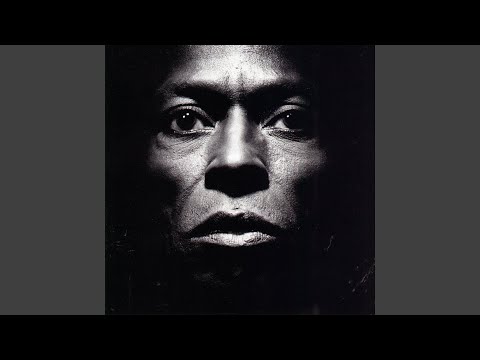
PG: When you composed the song “Tutu” you pulled together different ideas from Miles’ career: a drum rhythm from New Orleans that Miles once showed you, harmonic ideas from his 1950s and 1960s work with Gil [Evans] and the [second great] quintet, soft brass sounds like Birth of the Cool (Capitol, 1957), and some ideas he had in the 1970s. You wanted to see what he was drawn to, which ultimately was the blues. Did Miles know you were pulling ideas from these different eras? If so, what did he think of it, considering his reticence to revisit ideas from the past?
MM: Well, I never stated to anyone that that was how I was approaching the piece. It was all only some thoughts in my head. Because the music sounded so new, most people would not have picked up on how I used the instrumentation of Birth of the Cool for the melody of “Tutu” in terms of the trombone and soft brass, along with the trumpet on top. Christian Scott, who played trumpet in the Tutu revisited tour with me, even said that when he first heard “Tutu,” he heard the rhythm and the overall sound and didn’t tune into the harmonies until he was actually playing the music. For a lot of people, the sound of the record prevented them from getting into what was really going on harmonically.
PG: As far as the rhythmic elements of “Tutu,” there is a story that you also had to radically modify the drum machine to try to get the rhythms to swing a little more than a machine really could.
MM: No, I didn’t modify it; I just knew how to program it. If you’re a musician, the drum machine is just a tool. Any stiffness from a drum machine has nothing to do with the machine. Prince used stiff drum machine patterns because that gave him something to play against. But if he wanted to, he could have programmed it however he wanted.
Early on, drum machines were cumbersome. To get them to do anything but quantized stuff was difficult. The early drum machines could only do straight time. But a couple of years later, you could get it to not follow only straight time if you knew how to program it. If I gave Jeff “Tain” Watts a drum machine and told him his drums were gone and wouldn’t be back for six months, he would have that sucker swinging its ass off.
With “Tutu,” I was trying to figure out how to mix funk with jazz, and the song was one of my first successes at melding the two. I also played some snare drum along with the machine to get some of the ruffs and the flams. Later on, I figured out how to do those sounds on a drum machine too, but at the time, I got a snare drum in there and jammed with the machine, which was fun.

PG: After Tutu, you made the film score for Siesta with Miles. Miles had done scores before, but this was your first. What was it like following up an album where Miles relied on you to guide him through the sonic environment with one where, presumably, the paradigm was reversed?
MM: The Siesta thing was typical Miles. The filmmakers called him to see if he would do a couple of songs for the movie. They originally used Sketches of Spain as the temporary score. Miles said he would do it, then had them call me. I did two scenes, and the director asked for one for a third one. So, I go, “Wait, am I doing this whole movie?” And the director says, “Yeah, didn’t Miles tell you?” So I started working on the rest after being thrown into deep water. But by that time, I was used to the deep water with Miles.

PG: After Siesta came Amandla (Warner, 1989), an incredibly underrated record from the last decade of Miles’s career. How did the album come together?
MM: Well, Tutu was like putting your toe in the water in terms of Miles in this modern setting. After working on both Tutu and Siesta, Miles and I were very comfortable working together in that way. He would call me and send me music and say, “Hey man, have you ever heard of this group Kassav’? Check this out,” or “listen to this African beat man,” or “I heard that record you did for that group, E.U., ‘Da Butt’- get me some of that going on.” He would call me with all kinds of random directions.
I was enjoying it and was writing from a very firm standpoint now. We had done Tutu, and I knew what worked and what I wanted to do differently. For example, even though I played all the instruments on Amandla initially, we eventually brought in different players- Kenny Garrett, Omar Hakim, Ricky Wellman, and Foley. We brought a lot of people in to open it up more. I knew where Miles was in terms of technique on his horn, and he was getting stronger. On Tutu, he still wasn’t entirely strong yet. But if you listen to Amandla, especially on “Mr. Pastorious,” he’s not even playing behind the mute anymore. He’s playing full open horn, with a truly glorious sound. He had been getting stronger through those years since he returned to playing. I also felt more comfortable bringing my own sound into the music. There is an African influence definitely, but also a Caribbean influence – not just reggae but calypso almost – that reflects the music I grew up listening to. It was a very free feeling by the time we got to Amandla.

PG: As you know, there have been so many artists over the past few decades who have merged ideas from jazz, hip hop, and R&B. Do you see a connection between where they are exploring and what you and Miles did on Tutu or Amandla?
MM: I think Miles was very influential in that sense. You can turn on jazz radio and hear music trumpeted over hip hop beats all day long now. And it’s filtered into the mainstream through commercials. He was an influential man, even in the 80s. There are a lot of people, a lot of musicians, whose style is based on one seven-year stretch of Miles Davis’s musical life. Some people play in a 50s style. Some in his 60s style. Some in his 70s style. And there are a lot of people who play in his 80s style. They just don’t always realize that is what they are doing.

PG: If Miles were still alive today, what do you think he would be exploring musically? While he was getting into hip hop towards the end of his life with Doo-Bop (Warner, 1992), he was never someone to stay in one place for long.
MM: He did a hip hop album that he didn’t really finish. But he was heading in that direction, and I think it would have been cool. I think at a certain point, he probably would have said he was ready to move onto a band in the studio and sounds from cats who sound like live musicians. But all live musicians today have been influenced by machines. They’re all playing as if they’re a sample [laughing]. So while he would have put a band in the studio, it would have had hip-hop in its genes. In its chromosomes. It would have been interesting to see what he would be doing today. I would just want to make sure he had something meaningful to play. Nobody could play a melody like him. Every once in a while, I want to hear his glorious sound again- still searching, still leading.
Celebrate the legacy of Miles Davis by examining his full output. You can learn more about his late career works through our conversations with Kenny Garrett, Jason Miles, Deron Johnson, and the late Marilyn Mazur. You can also learn more about Marcus Miller on his website.