

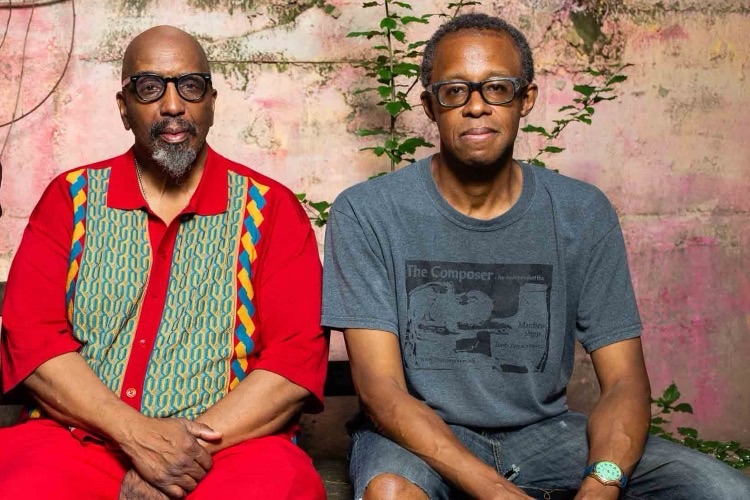

What is creation? For a term used regularly, its imprecision is remarkable. Is creativity the manifestation of something out of nothing? The prevailing narrative in Western music certainly suggests this. We point to great composers like Bach or Stravinsky as brilliant minds who created some of the most memorable melodies out of thin air. But nothing exists in a vacuum. Nothing is fully immune from the environment from which it forms. Music is inherently shaped by the artist’s life experiences, personality, temperament, and aspirations. It even subtly bends to accommodate the fleeting minutiae of the exact moment it is performed, whether a reciprocal understanding between artists in the studio or a tacit conversation with a live audience. Perhaps then, creation is less a construction than a transformation; an environmental reconfiguration. This perspective, however, is also flawed. Countless generations of artists have pointed to something – whether a divine being, a higher force, or nature – that manifests their music in ways beyond the logical and conceptual. Perhaps then, creation is primarily an act of discovery. Our conversation with Matthew Shipp and William Parker on their fourth duo album, A Whole System Of (AUM Fidelity, 2026), reveals that these three perspectives – invention, transformation, and discovery – are hardly contradictory forces.
The title A Whole System Of naturally suggests a rigid structure. It implies a concrete set of practices manifesting into a recorded output, whether adherence to a set of compositional structures like chords or to a lineage of artistry. But the title’s refusal to end its thought inescapably throws doubt into the proposition. If the record reflects a set of processes, what even are they? Is the name intended tongue-in-cheek to mock the idea that artistry can be adequately broken down into its parts? Or is it intended to reflect the fact that there are systems outside of conventional Western musical understanding at play here? The ambiguity is delicious. Perhaps the most compelling interpretation is the latter – there are systems here, but few would be able to cogently identify them. Perhaps they are tied less to concrete musical theories and more to these particular artists’ relationships to sound. Indeed, one familiar with both gentlemen’s work will unquestionably identify their idiosyncratic voices – whether Shipp’s heavier bass line clusters or Parker’s urgently imposing plucking – recur throughout the record.
But the thought that personal idiosyncrasies can themselves form individualized systems leads to the thought of creation as transformation. Holding that a system is particular to the artist unavoidably invites the uniqueness of their lives into the conversation. An artist’s sound is as individual as a fingerprint, its contours shaped by experiences and thoughts that belong to them alone. This aspect is particularly noticeable when an artist finds a well-aligned partner. For Shipp and Parker, who have worked together in countless configurations over the last four decades, the dialogue comes naturally. And it by necessity brings in years of experiences and conversations – both on and off stage.
However, both Shipp and Parker have regularly stated their music also comes from elsewhere and that it is primarily their job to let it flow as it desires. As the bassist said in 2021, “Music comes from creation. It comes from the Creator, if you believe in the Creator. It comes from nature.” Or as the pianist put it two years later, “The journey is everything. If you solve the mystery, then the whole thing is over. The quest is everything.” So much of their work comes from some existential force. Their skills and work primarily aim to give them the technical skills requisite to let that third voice manifest through them. It gives them the patience to step aside when the music needs it. They allow the tangible and the intangible to blur in ways a less gifted artist could not.
And so, the demarcation between invention, transformation, and discovery as defining forces of creativity quickly evaporates. What we are instead left with is a recording that must be considered solely on its own terms, not as an end product of some preconsidered origins. In the case of A Whole System Of, one senses they are witnessing small glimpses at a larger fresco, the entirety of which remains out of view. The opening “Deeper Fields” finds Parker’s bowing erecting a frame for Shipp’s construction of the Jenga Tower; sturdy and upward but by no means regimented. “Notions of Order” hints at a thoroughly preordained theme but inversely follows it and twists it to unpredictable ends. At about thirty seconds in, Shipp plays a line that ever so briefly sounds like the melody to Nirvana’s “Smells Like Teen Spirit” before breaking off into a completely different direction. To steal a thought from our conversation below, the piece’s flow almost suggests a cartography that briefly incorporates pop culture sentiments before abandoning them as if their planned trajectory vanished. Their rejection is less out of some perceived inadequacy of the set course but due to its insufficiency to address the needs of the moment. “The Essential Blue Note” seemingly takes a similar perspective, with Parker’s bass providing subdued and isolated rumbles for approximately two minutes before Shipp’s keys lingeringly dance around the motif, seemingly coaxing his counterpart into more propulsively brazen terrain.
We sat down with both Shipp and Parker to discuss their forty years of creating together and to obtain a further understanding of creativity itself.

PostGenre: You have worked together in many different configurations over the last four decades. But A Whole System Of is only your fourth duo album together. Why not more?
Matthew Shipp: Wow. Well, for one thing, most of the time record producers think it is more commercially viable for an album to be released as a trio with a drummer added. The opportunity to record as a duo doesn’t arise too often.
William Parker: As far as record producers go and why there aren’t more records, I think that instead of recording only once every so often, we’d have to do it more. If we played duo more often, there’d be more recordings. But I’m not really sure how record producers think. That’s a whole other thing.
PG: What do you feel you get out of the duo setting that you do not in a quartet or trio?
MS: For one, playing with William is a joy beyond joy. When I get to interact with him directly without anyone else’s input, I feel like the joy is beyond belief.
WP: Matthew and I have both been involved in so many other projects. But playing duet is a special thing because it lets you go back and grab some inspiration and sustenance. It lets you see if how we play together still works in certain ways after all these years. Every time we play, we find that the magic is still there. In fact, it’s grown rather than diminished over the years.

PG: What do you think has made that magic grow over time?
MS: What we do individually is so organically rooted in us that it can grow like a big tree. We didn’t go to school and learn riffs or something like that. What we possess is very inwardly ours, both as individuals and collectively as a duo. And that’s grown naturally because it is natural.
WP: There’s also no hardset concepts in our playing as a duo. We don’t define our instruments’ roles in a certain way. We come with no preset idea of what to do together. Because of that, we’re very open to growing and being magnetic to whatever’s happening at the moment, which is always different.
PG: It’s interesting because the title, A Whole System Of suggests something more conceptually concrete. But you also leave the title open ended to explain what the system represents. Where do more concrete concepts and principles enter into the equation when you are playing together as a duo?
MS: Well, when I came up with the title A Whole System Of, I purposely left off the last word. It’s for the listener to fill in. Certain people might want to say it’s a whole system of shit. Certain people might say it’s a whole system of light. But something is pouring through us and driving us. I had to leave it mysterious as to what that something is because I don’t even know what it is. I think we have the propensity and the courage to give ourselves over to the light, or to whatever the force is, that moves to us and allows the natural architecture to form. It’s a mystery to me what that is, but I know it has integrity. The system is like your body where every cell is an individual organism, but they all work together to give the whole structure integrity. I know what we do has that even if I don’t know what holds it together other than what some people might call God or some generating principle or spirit.
WP: My first record, which will be released next year as a three LP set on Eremite [Records], was titled Through Acceptance of the Mystery Peace (Centering, 1980). The title reflects what I do. Rather than trying to solve the mystery like it is a problem, I accept the mystery. Once you accept the mystery, different things can evolve or grow. One of those things is peace. Another is relaxation so things can float. But if you’re trying to figure out what you can do to make it all work or what you can do to play the right thing, you are going to miss it. It’s not about right and wrong. You play the right thing on Monday and when you play it on Tuesday, it’s the wrong thing. Then you play it again on Wednesday and it’s still the wrong thing.

MS: Yeah, there’s a lot of information out there. We’re all hit with a trillion bits of information a second. No one can use their rational mind and figure their way out through it all. So you might as well, as William says, accept and have trust in the natural order of things. That acceptance, faith, and trust are what allow you to relax and let something happen. Ironically, that approach of accepting is a lot of work. When you learn how to play your instrument, you’re taught not to relax. You’re taught to tense up and think about what’s “right” and what’s “wrong.” It actually takes a lot of work to get to the point where you can just say, “fuck it” and relax into the situation. That’s what I’m still trying to do.
PG: If the key is to step back and accept what comes through you, why do so many musicians resist that approach?
WP: Well if you train yourself to take one approach over years and years of playing, you really get the idea that it works better. But it actually works best when you let the music flow and just accept it. There are many ways and systems of music. In this part of the world, we only use one system of music which is based on European, piano-based music. For any instrument, there’s a sound system, a note system, and a tone system. I prefer to play something that is not of a note system. I never think of notes. I think of sounds. The notes B and C are next to each other on the piano. But between the B and the C, there are many sounds. If you play both the B and the C, you have a sound that’s neither B nor C. You’re working in a whole other system.
When I was studying the bass, one of the things I was taught is that evil, hate, and racism cannot be plucked away. It can only be bowed away. My assignment as a musician is to help alleviate the world from hate, evil, and racism, and to try to bring up some of the enlightenment that’s inside people and that’s coming through people. I use that as a concept instead of worrying about things like how can I resolve a pattern. And it’s a system. There are other systems that people use that are also different from the systems that have previously been laid out. And maybe the music that we consider great has been analyzed wrong because of the system we view it through.
PG: Is it easier to follow other systems when you are working with somebody you have worked with often and know well compared to when performing with someone you just met?
MS: I don’t follow any system. I mean, obviously I do because I have a track record of albums and it is me throughout all of them. There’s an approach that I follow. But it’s not a system per se. Bruce Lee developed a martial art called Jeet Kune Do which is not really a style but more about being in the moment, taking from everything, and paring things down to the essentials – utter simplicity – to be yourself in the moment. That’s what I attempt to do with music; to be open to the vibrations of whatever “system” it is. I take what’s given me and pare it down to its essentials that correlate to who I am and what’s inside of me. And when I interact with somebody – have a conversation with them – I’m not thinking in terms of any system. I’m entirely keyed into what works in the moment.
WP: It’s like having a map that disappears the minute it appears. It guides you, and then when you turn around to look at it, it’s not there. You’re on your own. You don’t really know what you’re doing or why you’re doing it. But at the same time, you do it comfortably. Every time I play, I know where I’m going and where I like to see the music go. Somehow, every time, and I have no idea how it does.
MS: That’s very important. William described it as a map that disappears. We’re definitely pushing against something structurally in our subconscious. But once the act of playing starts, whatever it is the field of language or of vibration that we’re pushing against guides you. It’s in the deep recesses of our subconscious even with a strong structure and force or architectural undergirding.
We need the map to be able to do what we do. We don’t even know exactly what the map is. We just know it’s something that’s been built over years and years of practicing and working at what we do. It’s a guiding force. But, again, as William said, the map disappears. The second you play the first couple of notes, something else is constructed on top of it.

PG: A Whole System Of has a piece “Notions of Order.” Is the title also intended to point to this idea of the disappearing map?
MS: The titles are metaphysical and more to get people to think in terms of concepts that might be under the surface. What happens under the surface and what happens on top of the surface are often completely different. You might see me walking down the street and I’ll be smiling and look like I’m in a good mood. But I could be thinking horrific things and you would never be able to tell from the surface at all. The structural underpinnings of what we are doing are pure vibration and pure light. Pure natural beauty. And what unfolds on top of it is a mirror of what guides us. Weirdly, sometimes you go into the studio, the tape’s turned on, you close your eyes, you start playing, and then you finish and you go in and listen. I might have no idea what we just did, but when you listen back, it sounds inevitable.
PG: Where does the audience fit in with all of that? Obviously you do not have one – or much of one – in the studio but you also perform live as a duo.
WP: Well, the audience is part of the environment. They do what they do. They perceive things the way they want to perceive them. And that’s listening. That’s feeling. That’s moving to the music as they listen, feel, and move. There’s no one way to do it. Everyone has their own musical DNA and everybody has their own listening DNA. Everybody listens differently and everybody hears differently.
If I got up in the morning and played some music in my apartment with no audience there, where does it go? Your audience is the sky. Your audience is the earth. Your audience is the air in the room. They’ll take [the music] in the way they’re supposed to take it, which is all the ways people can take it. They can like it. They can love it. They can hate it. But they know that the underlying reason for the musician doing what they’re doing is because it’s like Joseph Jarman said, “we sing because we love you.” That is why we perform.
MS: I love the audience for being at our performances. I would love to say that when the music starts, it’s just William, myself, and the music. But that’s not really true because whenever you’re in an environment, it’s a holistic thing. The audience plays a part because I can feel their vibes when I play. Even when I close my eyes and seemingly focus in on myself, the other vibes in the room still enter the equation somehow. I don’t know how exactly. I can’t sit here like a mathematician and say seventy percent is this and thirty percent is that. But the audience’s vibes do enter the equation somehow.
In the ultimate metaphysical way, you could look at the audience as manifesting us, the two performers, on the stage. It can be looked at in many ways. It’s a shared experience between the audience and the performers. So, ultimately, I don’t know the answer to your question about where the audience fits into the picture. When I’m in a room playing music with people listening, I’m trying to go deep within myself. But, at the same time, there are other souls or beings of light in the room and their light force somehow does enter the equation of what’s happening. And who is to say where one begins and the other ends? Are there even lines of demarcation at all?

PG: You mentioned earlier how sometimes you do not fully recognize until later what you have performed. But, presumably, you are listening deeply to each other.
WP: You’re listening to everything. I’m listening to everything. I’m seeing everything. In fact, I’m listening with bigger ears. I’m looking with bigger eyes. Even with my eyes closed, I’m using closed-eye vision. You hear everything that’s going on in the room and it affects you in some kind of way and also does not affect you. It’s doing both of those opposites at the same time.
MS: Yes. As William said earlier, a musician can basically do whatever they have trained themselves to do. We have trained our whole lives to take in everything in the immediate context and instantly react. And that embodies intense listening. It embodies being able to conceptualize everything that’s going on. The listening is so intense that when we play something as a duo, there’s even a part of my subconscious that probably tries to anticipate what William’s next move would be. So it’s even deeper than simply reacting to the moment. It’s really a holistic thing.
I’m a boxing fan and part of a boxer’s job is to take in the data and not have their head where the next punch is coming. There are a lot of aspects of that in what we do with music. As William said, we really train ourselves to take in everything in both a micro sense and in a macro sense. What we do embodies a lot of different things but one part is an intense depth of taking in what’s going on in the moment. So, yes, we listen very carefully. I close my eyes but I don’t close my ears.
PG: How you take things in would also seem to reflect where you, and the world, are at that particular point. At the same time you are releasing A Whole System Of, you will also be re-releasing your first duo record together, Zo (Rise, 1994). Is there anything in your conversations on Zo that you feel you would not have done today or could not do today?
WP: I’m just playing the Blues. All I play all day and all night is the Blues. I’m a Blues man. I was born under the star of the Blues. I was raised listening to Duke Ellington, Coleman Hawkins, Ben Webster, Jimmy Blanton, Wellman Braud, and Eddie Jones. Blues is all in there. So, I don’t really know if I do anything different. I am sure, to some extent, I would because then was then and now is now. But if I was walking down the street and somebody threw a safe out of a window and I saw it was about to hit me in the head, I would move. I’d move now just as I would have thirty years ago. Certain things wouldn’t change and certain things would. But, ultimately, I would stay the same.
MS: Zo is what it is and that’s the charm of it. There’s nothing I would change because I can’t change the record anyway. Besides, why not just revel in the natural progression? I don’t even know if progression is the right word, but certainly change. Everything is in flux and there’s nothing you can do about it. You surely don’t want to arrest the development of anything. The natural beauty or grace of something is that it is what it is and it’s grown in the way it grew. What worked for us back when we recorded Zo and what works for us now are naturally going to be different. And that’s all I can ask for.
PG: As far as a work reflecting the time in which it is created, sometimes the circumstances of the present are a restriction. Is musical freedom the absence of those constraints, or is it more of a transformation of those constraints into something productive?
WP: Freedom for me is that when we’re playing, I’m free to do all the different rhythms that exist and all the different melodies that exist and are growing. To me, harmony is people living together without dropping bombs on each other. So, I don’t really define harmony based on putting some pitches together and then stacking them up. I think if you’re intending to do something when you play, that’s your thought process. That’s your mantra. And if I keep playing G all the time, that is because it is my mantra note. G is my drone to the world to put out a certain vibration. And that’s why I play it. And then how do you resolve it? I’m not really trying to resolve it. I just play with my whole heart and let it flow through me. And then when I stop, I stop til I start again.
MS: Yeah, I don’t really think in terms of freedom versus non-freedom. Not to bring up Bruce Lee again, but he always talks about searching through to being yourself. I figure that if I can get to the essence of myself in playing that is what really makes me free. I’m not trying to play any particular style. I reject the idea of jazz. I reject the idea of free jazz. I’m just trying to play my song, whatever that is. My song does sound different than one by Neil Young or someone else, but it is, nevertheless, my song and I’m just singing it to the universe. When I do that, I feel free.
I’m trying to present a vibrational map of how my brain is connected to a universal mind and have that translate into music. And, so, I had to search myself to find out what really is me. And then when I’m playing with other people, it’s different from when I play solo.
To go back to Bruce Lee, he always talked about simplicity. Some people think that what I do is quite complex. I’m actually aiming for utter simplicity. Even if there might be a lot of density at times, I want the basic impulse of my music to be simple. The message for me is to give myself over to spirit and nature. Apart from that, there really isn’t a message. For me, it is all about how to reach the divine impulse. We’re all hit with so much information but the divine impulse is eternal. It is limitless. There’s no simply taking it in. It is more of a form of emptying yourself than filling yourself up with knowledge and information. That’s my message, if there is one. I’m just trying to get to the root of it all and to generate something from it. And the root of anything is utter simplicity and nothingness.
One thing I wanted to add to what William said is he talks about being rooted in the Blues. But I think the vibration William comes out of is even deeper and older than the Blues. William is remarkable in that he never got talked out of being himself. It’s very easy for a musician to be taught to be someone else. When they are studying, people tell them that something is “right” or “wrong” and that they are gonna starve to death as a professional musician if they don’t do things the “right” way. But William basically stuck by the vibration that he somehow discovered at a very young age. He did study with some really heavy people but he got what he needed from them while remaining himself.
In many cases, a student can get caught up in their teacher’s baggage, but William was able to maintain his quest for that initial vibration. He discovered it in an almost religious way, because it was definitely connecting the impulse to play music to some type of spiritual or religious quest. And he just kept developing it over the years. That’s very rare when our society so often tries to talk people out of being themselves. It’s amazing to see somebody discover an impulse and keep at it, to keep digging that gold mine until they actually tap into the gold and just stay there.
WP: To sort of volley this back, people sometimes use the term fully formed embryo. Matthew was a fully formed embryo when I first met him. He was ready to grow and he keeps growing and developing. And his growth has nothing to do with what another piano player did. His book, Black Mystery School Pianists and Other Writings (Autonomedia, 2025) is great and gives you a little inclination of where he comes from. People are always trying to overanalyze things. Shut down your mind, people. Just shut it off and enjoy. Some things in life are so beautiful that you have to simply accept them as they are. When you see a baby taking its first steps, it is beautiful. We don’t need to explain why it is beautiful; we just accept that it is. The same goes for music. Don’t label it and get it into a box because once you get in a box, it’s hard to get out. Just accept that it is beautiful.
‘A Whole System Of’ is out now on AUM Fidelity. It can be purchased on Bandcamp. You can learn more about William Parker and Matthew Shipp on their respective websites.


Leave a Reply