

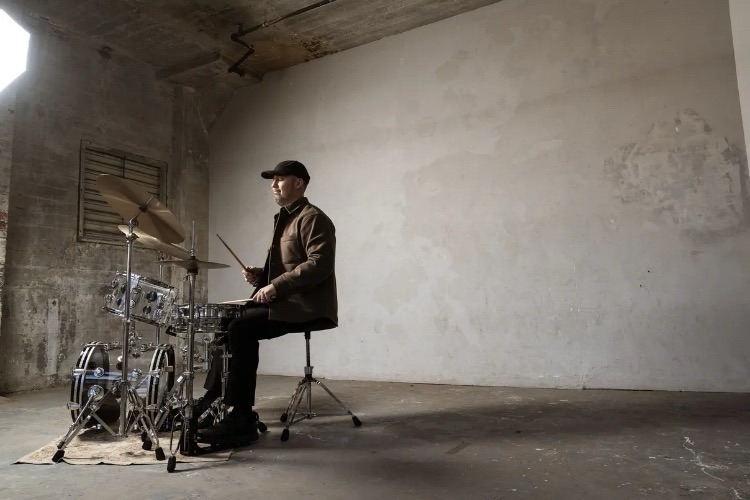

Where do we go from here? Though we all exist on a linear timescale, humans have always wondered about the great beyond; about what happens at the end of what is seen and rationally foreseeable. While animals recognize death, current scientific research shows they do not ponder the afterlife as humans do. Part of the age-old contemplations of an afterlife are emotionally based; based on concerns about whether and how we will see departed loved ones again. But another force comes from the inherent mystery of the unknown. We pride ourselves on being rational creatures who strive for scientific truth. We have charted our entire planet. Navigated ocean trenches. Voyages to the dark side of the moon. Shot probes into interstellar space. Created machines that may be even smarter than us. And yet with death, there remains something beyond our worldly grasp. A space exists in which there is no academic consensus and we often rely on faith alone. This duality of what draws humans to thoughts of the eternal lies at the core of Willy Rodriguez’s In the Unknown (I Will Find You) (Sunnyside, 2026).
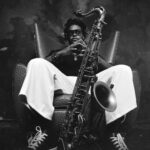
In the Unknown was initially conceived by a son mourning the loss of his mother. The story of Rodriguez’s mother’s diagnosis, sickness, and ultimate death from brain cancer is told through the album’s track progression through “A Room Full of Confusion,” to “Where I Saw You Last,” to “Follow the Light.” The emotional weight of the record is equally evident to one unaware of its backstory or the names of each piece. The solemn echoes of Ingrid Laubrock’s tenor saxophone and Leo Genovese’s space enveloped keys on the title track evoke a great sorrow towards something beyond the composer’s control. Genovese’s organ work suggests a church funeral before a final release.
In this sense, In the Unknown can be seen as a series of private journal entries by Rodriguez. Sonic soliloquies in which he vulnerably allows the listener to witness him bearing his soul. The fact that the melodies for each piece came together so quickly – within a two-day period shortly after his mother’s passing – only further bolsters the perspective that the pieces come from a deep emotional well that is not behind public facades or pretenses. And yet, Rodriguez refuses to isolate the album’s emotional pull solely for himself.
Instead, he explores broader themes of loss and memory to which all listeners can connect. After all, due to its inevitability, we have all felt death’s sting. Brilliantly, a central part of exploring shared grief lies in the album’s subtleties. As the leader, Rodriguez could have emphasized his instrument – make In the Unknown a “drum” album – above all else. His work with The Mars Volta and NEA Jazz Master Dave Liebman certainly shows Rodriguez has the technique to do so. But his focus is outward; on making the trio sound as a cohesive, singular whole, even if that means his sticks sit more in the background at times. The album’s incorporation of sound design muddies the line between the acoustic and electric, suggesting even a broader perspective than the artists at hand. The inclusion of Alan Harris’s poetry recitation on “The Perplexity of Eternity” shows a transcendence of form itself. The message is clear: what we experience with In the Unknown is broader than one artist- it reflects the grief all humans experience throughout their lives.
In this sense, that the album was recorded in the iconic Van Gelder Studios is especially poignant. Rodriguez refers to the studio in our conversation as being like a church. And the shadows of the spirits that have passed through its doors certainly continue to subtly resonate in everything recorded there, including In the Unknown. By choosing to create in this space, Rodriguez suggests that grief is broader than it appears. Unquestionably, we grieve lost family, friends, and those we personally knew well. But when the ancestors who provided soundtracks to our lives pass to another realm, do we not also mourn, albeit in a different and more subtle way?
Recording at Van Gelder also provides a powerful statement about what it means for someone to have moved on. It is easy to act as if there is a clear division of body and spirit when one passes. After all, the former remains on this earth with the latter transported elsewhere. But things are seldom as clean as they seem. The history of Van Gelder studios reflects this well. Figures like John Coltrane or Miles Davis are long gone, yet still continue to shape hearts and move minds on a near-daily basis. The wildly radioactive piece “Curie’s Notes” also refers to this by underscoring the continuing resonance of Marie Curie’s scientific discoveries. Admittedly, not everyone is a legendary artist or a brilliant physicist-chemist, but their other lasting contributions to the rest of us – the things they left behind – remain no less powerful or significant.
Someone seeking a fun recording they can put on in the background or to dance to, best look elsewhere. But for one willing to experience the emotional weight of music at its finest or to discover a recording that evokes serious philosophical considerations, In the Unknown is a worthy listen.
PostGenre: Before we dive into In the Unknown – you met Joni Mitchell earlier this year?
Willy Rodriguez: Oh, man, that was crazy. I saw her walking in at the Grammys. On the red carpet, there is a shortcut at the entrance – the “B-line”- where you can avoid the whole madness of photographers and interviewers and go to the end. At the end, the Recording Academy takes an official picture of you before you go into the ceremony.
I was standing right at the “B-line” and saw Joni there. She was so nice. I mentioned my father-in-law [Dave Liebman], and she said she remembered him from a party they were both at in the 1980s. And we walked together for a little while. I was very surprised she was walking. She still had a wheelchair being pushed behind her, but she wasn’t using it. It is amazing that she was walking.

PG: It seems like she keeps doing better and better as time goes on.
WR: I know, right? And she was very sweet, and her manager was incredibly nice too.
PG: Has she been much of an influence on you musically? It isn’t necessarily evident in your sound, but we all have more overt influences lying beneath the surface.
WR: She’s been an influence in terms of the excellence of her music. Her music is so deep and thought-out. As an artist, that is really inspiring. She has never been bound to any fashions or trends. She has always been herself, both lyrically and harmonically. At the same time that Cher and others were chasing fads to stay relevant, Joni has always stayed true to herself. For me, that is one of the best things an artist could possibly do. I love that about her and a lot of musicians that she’s worked with, too.

PG: While Joni never did, some of the other musicians she has worked with – Wayne Shorter and Herbie Hancock, for two – have recorded some of their best albums at Van Gelder Studios. You also recorded In the Unknown in that famous space. Do you feel the studio itself can be heard in the recording in some tangible way?
WR: Oh, man. The room is so deep in terms of sonics and the atmospheric vibe. It gave me exactly what I was seeking for the record. I was looking for the record to have a cinematic atmosphere, and that’s exactly what we got from recording there. From our first note there, you could tell we were in a sacred place right away. In some ways, it is a church, not a studio. And that inevitably shaped the way that we played the music.
PG: While the term “spiritual jazz” is undoubtedly problematic, it is also interesting how the space where [John] Coltrane recorded A Love Supreme (Impulse!, 1965) is the same space where you are dealing with such significant spiritual issues as death and the afterlife on In the Unknown.
WR: Yeah. If you haven’t had the opportunity to go to the studio, just do it. I recommend that everyone go visit it. You need to feel the energy of the place. It goes so deep. The moment you get there, you immediately feel something very heavy on your shoulders. And it’s so inspiring. There is an energy there that’s incredibly hard to find in any other studio in the world.
And the acoustics of the space are a whole other element. Especially for Ingrid. I feel the space influenced a lot of her playing because you’re in a big room where the natural reverb comes back to you. Because of that, the way you play is more spacious. She told me that playing there was a special experience for her. It was for all of us. And when we were in the process of mixing, we realized how excellent the sound coming out of the room mics truly was. And that’s what you hear on the record.

PG: But sound design is also an important part of the record.
WR: Yes. Chris Connors and I worked on the sound design and produced the record together. Chris is a really heavy cat. But he has also worked with Kanye West and many pop artists. He adds a lot to the record.
PG: Is his sound design part of what makes the group sound like such a unified whole? Although you are an incredibly talented drummer and there are great percussion parts on the record, the trio truly moves as a singular group.
WR: For me, the most important part of picking a group for the album was finding people who have been through the process I went through, where I lost my mom, and specifically the kind of condition that I felt. When I approached Ingrid about the project, it was after she had gone through the same type of process. only a couple of months or maybe a year earlier. I was more focused on the emotional statement of the compositions. I knew that I wanted the drums to be a blending glue to it all.
For this project, I was trying to be more like a painter with a canvas. The beautiful colors were Leo, Ingrid, and the room, too. To make the most of Van Gelder, you need to play very calmly. But I mostly tried to blend things well, to make the melodies and form as clear as possible without the drums being overpowering. I love the sound of drummers like Rashied Ali and early Jack DeJohnette, but I also know that adopting their approach is sometimes too loud. I needed to find a balance between the power of their sound and also not being overpowering. That’s why the drums often take more of a supportive role on the record.
PG: As far as writing after your mom’s passing, was it emotionally difficult for you to actually sit down and write the music, given the context, or was it almost cathartic to do so?
WR: It was so weird because the melodies came out to me incredibly quickly. I found myself in a really weird position because, as my mom was passing away, she was most worried about us, the family, and what would happen to us next. Of course, she was the boss in our family. Latina moms do everything, and she worried about how we would take care of ourselves when she was gone. I told her we would be okay and that we would see her again someday. Her dying was not the end. I’m pretty sure it is just another chapter. But, at the same time, no one fully knows what happens after death. And that paradox inspired me to do all these things musically at the moment they came to me. It was crazy.
I wrote the melodies for all of the songs on the album in two days. And then after those two days, I went to a wedding, and that’s where I was finally able to meet Chris Connors, the sound designer, and talked to him about it. And we decided that we needed to make the album happen because of how shocking it was for those melodies to come to me in such a short time. And we did the album, man.
PG: As far as your mom, what can you share about her? Was she hesitant when you decided to become a professional musician?
WR: No, my dad is a musician as well. He is a salsa musician, and Puerto Rico also has an almost African culture in terms of music, including the use of the hand drum. I’m glad I was surrounded by that stuff growing up.
But, yes, she was supportive. She was concerned about how difficult it often is financially to be a musician, but she was happy that I found something to do. That’s the biggest concern of parents. Especially in Puerto Rico, where there are not the same resources that we have here in New York. They have so many things for kids to do each day after school here. It just wasn’t that easy in Puerto Rico when I was growing up back in the ‘90s. Things might be different there now, but she was just glad I found something to do that I was passionate about. I totally got into practicing, studying, discipline, and all that stuff.
PG: Once you had written the compositions, how did you get the group together. You worked with Leo The Mars Volta and he is on your last album, but how did you get connected with Ingrid?
WR: Well, I’ve been playing with Ingrid for a while. I have a trio with Ingrid and Brandon Lopez, who’s another great musician here in New York, and a dear friend of mine. We have known each other for many years now. I knew that she would be perfect for this record from my previous times working with her.

PG: Did you always intend not to have a bass in the group?
WR: I work with some great bassists. Brandon, for one, is a genius in improvisation and other stuff. But sometimes on the bass, when you try to do open improvisation, it can be a little anchoring to some stuff. So I thought I should approach the album without bass, as an open canvas with no limits and nothing committed, in which I am the sole rhythmic colors. I think it really worked out because when I hear the album, I don’t even miss the bass. I’m really happy with the result, thank God.
PG: “The Perplexity of Eternity” features Alan Harris. Was his inclusion something you always planned on doing to have one with spoken word on it?
WR: The title of that song reflects one of the biggest paradoxes for me after the situation with my mom. Especially when someone close to you passes, you consider how fleeting our time here is. At some point, I’m probably never going to see or be back in this world again, and I definitely thought about that. But, at the same time, I found that working on this album also forced me to focus on being here.
The poem that Alan reads for the piece is by Robert Herrick. It is very old; written in the 1600s or 1700s. And I found it perfect for the tune because the tune gives you that feeling of going to a place. And I felt that poem might be a great addition to the piece. I had worked with Alan here in New York a few times, and he’s a friend. He’s been doing many poetry performances, and I love his voice. So, it seemed like a natural addition to have him read the poem. I went to his house to record, and he did a wonderful job.

PG: To ask you about another track on the album, “Curie’s Notes.” It is a powerful piece. How did it come together?
WR: That tune is a very important one for me. When my mom was going through treatment for cancer, she found it very difficult to get an MRI that she needed. The MRI itself was not difficult, but you have to travel far – to San Juan – for it. And by the time it happened, it was too late. Her brain cancer had spread too much. Obviously, it was a heartbreaking situation.
But I had studied up on the MRI and ran into the history of Marie Curie. She was not only the first woman to win a Nobel Prize but the first person to win the award twice. In her work with radiation, she pioneered so many things. And at some point in my research, I found that the notes from her lab were exposed to so much radiation that they remain radioactive today. They need to be kept in a special copper confinement because people can literally die from touching them.
PG: Wow.
WR: It’s crazy. And for the piece, I asked Ingrid to improvise a chord for me; to play a long note and keep playing the notes of the chord. She would create a chord block for me that I could mess with later in production. I wanted a personal, feminine moment of not melancholy, but not stress either. Ingrid understood and did such a wonderful job. She killed it right away.
I called it “Curie’s Notes” because with the sound design, it has this glowing power that feels almost dangerous — beautiful, but like something that could hurt you. Something truly radioactive.
‘In the Unknown (I Will Find You)’ is out now on Sunnyside Records. You can purchase it on Bandcamp. More information on Willy Rodriguez is available on his website.
Photo credit: Leslie Farinacci
Leave a Reply